

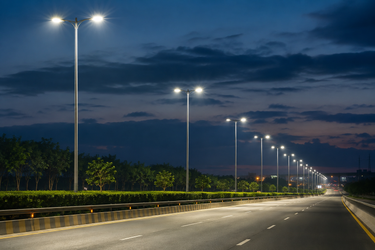
LED Street Light Standards: What You Need to Know Before Choosing a Supplier
Choosing an LED street light is not simply a matter of comparing wattage, price, and lumen output. For a road project, the fixture also has to meet the right electrical, photometric, safety, and environmental requirements. That is where an LED street light standard becomes important.
Different markets use different standards, and a product that works well in one country may still fail a project specification somewhere else. So, what should you actually check before choosing a supplier?
Why LED Street Light Standards Matter
For a distributor, contractor, or municipal procurement team, compliance is more than a box to tick. It can affect whether a fixture is accepted for a project, how reliably it performs outdoors, and how much maintenance it will require over its service life.
A good lighting specification normally covers more than the luminaire itself. It may define:
- Required illuminance or luminance levels
- Lighting uniformity
- Glare and light distribution
- Electrical safety
- Ingress and impact protection
- Operating temperature and environmental conditions
- Energy efficiency
- Testing and certification documentation
- Compatibility with local electrical systems
For example, ANSI/IES RP-8 provides recommendations for roadway and parking facility lighting in North America, covering areas such as streets, intersections, parking facilities, tunnels, and environmental considerations.
In Europe and other markets that adopt IEC-based requirements, IEC 60598-2-3 specifically addresses luminaires for road, street, and other public outdoor lighting applications.
The practical takeaway is simple: don't ask a supplier only, "Is this light certified?" Ask certified to what, for which market, and for which application?
Key Standards to Check for LED Street Lights
There is no single worldwide standard covering every aspect of an LED street light. Instead, project requirements typically combine lighting performance standards, electrical and safety requirements, and environmental protection specifications.
Lighting Performance Standards
Lighting performance determines whether a street light actually does its job on the road.
Important parameters include:
- Luminous flux and efficacy
- Illuminance or luminance
- Overall and longitudinal uniformity
- Glare control
- Light distribution
- Color temperature
- Color rendering
- Photometric data
In Europe, the EN 13201 series is an important reference for road lighting. EN 13201-2 defines performance requirements through lighting classes and considers factors such as glare and obtrusive light.
In the United States, ANSI/IES RP-8 provides roadway lighting design recommendations, while ANSI C136 documents cover various product-related aspects of roadway luminaires.
This distinction matters because a high-lumen fixture is not automatically a good road light. If the optical distribution is poorly matched to the road geometry, excessive light may fall outside the target area while creating dark zones or glare.
Safety and Electrical Standards
The next area is electrical and product safety. A commercial LED street light may be exposed to voltage fluctuations, switching events, moisture, and outdoor temperature changes for years.
Depending on the target market, buyers may need to review requirements related to:
- Electrical insulation and protection
- Dielectric strength
- Grounding
- Surge protection
- Driver safety
- Electromagnetic compatibility
- Photobiological safety
- Thermal performance
IEC 60598-2-3, for example, specifies particular requirements for road and street lighting luminaires and is used together with the applicable general luminaire requirements.
When reviewing LED street light certifications, procurement teams should therefore check the actual test reports and certificates rather than relying on a logo or a general statement such as "CE certified."
Outdoor Protection Requirements
Street lights operate in conditions that indoor lighting simply does not face. Rain, dust, humidity, UV exposure, temperature swings, and physical impact all influence long-term reliability.
That makes IP and IK ratings particularly relevant.
IP protection indicates resistance to the entry of solids and water, while IK protection relates to resistance against mechanical impact. The required level depends on the project environment rather than simply choosing the highest available rating.
Housing construction also matters. A robust die-cast aluminum housing can support heat dissipation while providing mechanical protection for internal components. Proper sealing around the housing, driver compartment, and optical assembly is equally important.
For this reason, outdoor lighting standards should be considered alongside the actual environmental conditions of the installation site.
Regional Requirements for LED Street Lighting Projects
One of the easiest mistakes for an international buyer is assuming that one certificate automatically covers every market.
It doesn't.
Different regions may combine international standards with national regulations, local electrical requirements, utility specifications, or project-specific tender documents.
Europe
European road lighting projects commonly reference the EN 13201 series for road lighting performance. Depending on the country and project, additional requirements may apply to electrical safety, electromagnetic compatibility, energy efficiency, and product conformity. EN 13201-2, for example, establishes performance requirements for different road lighting classes.
North America
In the United States, roadway projects may reference ANSI/IES RP-8 for lighting design, alongside applicable ANSI C136 requirements and local or state specifications. The current RP-8-25 edition covers roadway and parking facilities and addresses areas ranging from street lighting to intersections, tunnels, and parking facilities.
Australia and New Zealand
The AS/NZS 1158 series is an important reference for lighting roads and public spaces. AS/NZS 1158.1.1:2022 covers Category V lighting and includes performance, design, and energy-efficiency requirements.
This regional variation means the supplier selection process should start with the project location and specification, not with a particular lamp model.
How Standards Affect LED Street Light Selection
Standards directly influence the technical specification you should request from a supplier.
For example, two fixtures may both be advertised as 150 W LED street lights. On paper, they appear comparable. In a real project, however, their optical performance, driver quality, surge protection, thermal design, IP/IK protection, and available documentation may be very different.
A more useful comparison looks at the complete system:
| Selection Factor | What B2B Buyers Should Check |
| Light output | Lumens, efficacy, maintained performance |
| Optics | Distribution type, beam angle, road geometry |
| Lighting quality | Uniformity, glare, CCT, CRI |
| Electrical system | Driver specifications, input voltage, surge protection |
| Protection | IP and IK ratings |
| Housing | Material, corrosion resistance, heat dissipation |
| Maintenance | Driver access and replacement design |
| Controls | Dimming, sensors, smart lighting compatibility |
| Documentation | Test reports, certificates, photometric files |
| Customization | Power, CCT, optics, mounting and control options |
This is why the lowest initial price does not necessarily mean the lowest project cost. A fixture with better thermal management, easier maintenance, and a more suitable optical system may deliver greater value over the project's operating life.
For larger projects, buyers should also request photometric files and lighting calculations before final approval. These documents help engineers verify whether the proposed fixture can meet the required LED street light requirements rather than judging performance from a product datasheet alone.
How Infralumin Ensures Compliance with LED Street Light Standards
For an international LED lighting manufacturer, compliance starts before a product reaches the project site. Infralumin approaches LED street lighting with a combination of product engineering, quality control, component selection, and customization.
Its outdoor LED street lights are designed around practical requirements for commercial, industrial, and public applications. Features such as die-cast aluminum housings, high IP/IK protection, tool-free maintenance, adjustable CCT options, and smart lighting capabilities can be configured according to project needs.
More importantly, compliance should be matched to the destination market and application. Instead of treating certification as a generic marketing label, Infralumin can work with B2B customers to clarify the technical specifications, product configuration, and documentation required for a particular project.
This approach is especially useful for distributors, contractors, and engineering procurement teams handling different markets. A project may require a particular optical distribution, input voltage, CCT, mounting configuration, surge protection level, or control interface. OEM/ODM capability gives the supplier greater flexibility to adapt the fixture rather than forcing the project to fit a standard off-the-shelf model.
For procurement teams, the goal is not simply to find a fixture with more certificates. It is to find a supplier capable of providing a technically appropriate, properly documented, and project-ready lighting solution.
Conclusion
Choosing an LED street light should start with the project specification, not just the product price. Understanding applicable LED street lighting standards, regional regulations, photometric requirements, and environmental protection can help buyers avoid costly problems later.
If you are sourcing LED street lights for a commercial, industrial, municipal, or infrastructure project, Infralumin can provide OEM/ODM customization and outdoor LED lighting solutions tailored to your technical requirements. Contact the team to discuss your project specifications and find a street lighting configuration that fits your market.
FAQ
What is an LED street light standard?
An LED street light standard defines requirements for aspects such as lighting performance, electrical safety, construction, and environmental protection. The applicable standard depends on the project location and application.
What LED street light certifications should buyers check?
Buyers should check certifications and test reports relevant to their target market, product type, and project specification rather than relying on a generic certification claim.
What are the main road lighting standards?
Common references include EN 13201 in Europe, ANSI/IES RP-8 in North America, and AS/NZS 1158 for Australia and New Zealand. Local requirements may also apply.
Why are IP and IK ratings important for LED street lights?
IP ratings indicate protection against dust and water, while IK ratings indicate resistance to mechanical impact. Both can be important for demanding outdoor lighting installations.
What should I ask an LED street light supplier for?
Request product datasheets, photometric files, relevant certifications and test reports, IP/IK information, driver specifications, warranty terms, and documentation matching your local LED street light requirements.
Do LED street lighting standards differ by country?
Yes. Different regions may use different road lighting standards, electrical regulations, certification systems, and project specifications. Always confirm the requirements before selecting a supplier.

Zhongshan Lumin Technology Co., Ltd. is a renowned high-tech enterprise specializing in the research, development, and manufacturing of industrial LED lights.
Contact
@2026 Zhongshan Lumin Technology Co., Ltd.