

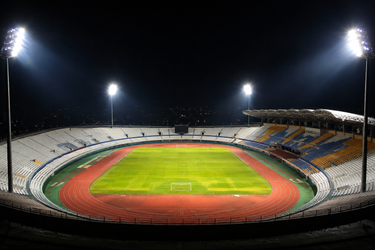
LED Stadium Light Buying Guide: Key Factors for Sports Lighting Projects
Choosing lighting for a sports venue isn't simply about finding the brightest fixture on the market. Whether you're planning a football stadium, tennis court, or multi-purpose sports complex, the lighting system must deliver consistent visibility, minimize glare, and perform reliably for years in demanding outdoor conditions. A well-planned LED stadium light buying guide helps project owners and contractors evaluate more than just wattage or price—it focuses on long-term performance, maintenance costs, and lighting quality.
While many outdoor luminaires look similar, professional LED Stadium Lighting is designed to meet stricter optical and structural requirements than standard flood lights. Understanding these differences will help you select the right solution for your next sports lighting project.
What Makes LED Stadium Lights Different from Standard Flood Lights?
Although stadium lights and flood lights both illuminate large outdoor spaces, they are built for very different applications. A standard flood light is intended for general-purpose lighting, while a professional LED Flood Light for Stadium is engineered to provide precise illumination, excellent uniformity, and dependable operation for competitive sports.
Lighting Level and Field Requirements
Sports facilities require much higher lighting standards than parking lots, warehouses, or building exteriors. Players must be able to track fast-moving objects, referees need clear visibility, and spectators expect a comfortable viewing experience.
A professional LED stadium lighting design focuses on both brightness and uniformity. Instead of creating bright spots with dark areas in between, the goal is to distribute light evenly across the entire playing surface.
When selecting stadium lighting, consider:
- Required illuminance for the sport and competition level
- Lighting uniformity across the field
- Appropriate color temperature and high CRI for accurate visibility
- Flicker-free performance for broadcasting and high-speed cameras
Meeting these requirements improves safety, visual comfort, and the overall quality of the sporting event.
Different sports have different lighting requirements. For example, football and rugby fields typically require high horizontal illuminance across large playing areas, while tennis courts demand excellent vertical illumination to help players track fast-moving balls. Professional venues hosting televised events often require higher lux levels, tighter uniformity ratios, and flicker-free lighting to comply with broadcasting standards. Understanding the specific lighting requirements of your venue is the foundation of a successful LED stadium lighting design.
Beam Angle and Light Distribution
Beam angle has a direct impact on lighting performance. Standard flood lights often use wide beam patterns to cover general outdoor areas, but this approach can create uneven illumination and unnecessary light spill in sports venues.
A professional LED Flood Light for Stadium uses precision optical lenses to direct light exactly where it is needed. Different beam angles can be selected according to pole height, field size, and fixture layout.
Choosing the correct beam angle also depends on pole height and fixture placement. High-mast installations usually require narrow beam optics to project light over long distances, while lower mounting heights benefit from wider distributions for balanced coverage. Using multiple beam patterns within the same project is common practice, allowing lighting designers to improve uniformity without increasing fixture quantity or power consumption.
Key benefits of optimized light distribution include:
- Better lighting uniformity
- Reduced light spill outside the venue
- Improved energy efficiency
- Fewer fixtures required for the same coverage
Selecting the correct optical distribution is one of the most important steps in achieving an efficient and reliable lighting system.
Glare Control
High brightness alone does not guarantee good sports lighting. Poorly controlled glare can make it difficult for athletes to follow the ball, distract spectators, and reduce image quality for television broadcasts.
Professional stadium luminaires are designed with advanced optics that direct light onto the playing surface while limiting direct exposure to players and audiences. Proper fixture aiming and precision lens design also help maintain comfortable visual conditions throughout the venue.
Effective glare control offers several advantages:
- Better visibility for athletes and officials
- Improved spectator comfort
- Higher-quality broadcast images
- Compliance with modern sports lighting standards
For many projects, glare control is just as important as achieving the target illumination level.
Durability for Outdoor Applications
Outdoor sports lighting must withstand rain, dust, wind, heat, and long operating hours with minimal maintenance. Since fixtures are often installed on high masts, reliability is essential for reducing service costs over the system's lifetime.
When evaluating LED Stadium Lighting, look for the following essential features:
- A die-cast aluminum housing that ensures efficient heat dissipation.
- IP66-rated protection against dust and water intrusion.
- High IK ratings for impact protection
- Corrosion-resistant finishes for harsh environments
- Tool-free maintenance features that simplify servicing
Outdoor stadium lighting is frequently exposed to heavy rain, UV radiation, temperature fluctuations, coastal corrosion, and strong winds. Selecting luminaires with robust mechanical construction and corrosion-resistant finishes helps reduce maintenance frequency while ensuring reliable performance throughout the product's service life. This is especially important for high-mast installations where maintenance access is costly and time-consuming.
Reliable thermal management is equally important. Efficient heat dissipation helps protect LED chips and drivers, maintaining stable light output and extending the fixture's service life. Investing in durable products not only reduces maintenance but also delivers better long-term value for sports facilities and infrastructure projects.
Why Choose Infralumin for LED Stadium Lighting Solutions?
Choosing the right lighting manufacturer is just as important as selecting the right fixture. A reliable partner can help optimize system performance, simplify project implementation, and reduce long-term operating costs.
As an experienced outdoor LED lighting manufacturer, Infralumin provides professional LED Stadium Lighting solutions for contractors, municipalities, distributors, and OEM partners worldwide. Our products are designed for demanding sports environments while offering the flexibility required for projects of different sizes.
Beyond supplying lighting fixtures, Infralumin works closely with customers during every stage of the project. From product selection and photometric recommendations to OEM customization and technical consultation, our team helps simplify procurement and improve installation efficiency. This collaborative approach allows contractors and distributors to reduce project risks while delivering reliable lighting performance for end users.
Why work with Infralumin?
- OEM and ODM services tailored to your brand or project requirements
- Die-cast aluminum housings for excellent heat dissipation and durability
- High IP and IK ratings for reliable outdoor performance
- Multiple beam angles and adjustable CCT options for flexible LED stadium lighting design
- Smart lighting control compatibility for improved energy management
- Strict quality control from material inspection to final product testing
- Premium components sourced from internationally recognized brands
- Professional technical support throughout product selection and project development
Whether you need lighting for a local sports field or a large professional stadium, our engineering team works closely with customers to deliver solutions that balance lighting quality, energy efficiency, and long-term reliability.
Conclusion
A successful sports lighting project depends on more than high lumen output. Lighting distribution, glare control, durability, and system design all play a critical role in achieving safe and efficient illumination.
By following this LED stadium light buying guide, you can choose products that deliver reliable performance and long-term value. If you're looking for a trusted partner for your next LED Stadium Lighting project, Infralumin is ready to provide customized solutions backed by professional engineering and dependable manufacturing.
FAQ
What is the difference between an LED stadium light and a flood light?
An LED Flood Light for Stadium offers higher illumination, better optical control, improved glare reduction, and greater durability for sports applications.
How do I choose the right LED stadium light?
Follow an LED stadium light buying guide that considers beam angle, mounting height, lumen output, IP/IK ratings, and LED stadium lighting design.
What IP rating is recommended for stadium lighting?
For outdoor sports facilities, IP66 or higher is generally recommended to ensure reliable protection against dust and water.
Why is glare control important in LED Stadium Lighting?
Good glare control improves visibility for players, spectators, and cameras while creating a safer and more comfortable sports environment.
Does Infralumin support customized stadium lighting projects?
Yes. Infralumin provides OEM/ODM services, customized optics, smart lighting options, and professional support for LED stadium lighting design.

Zhongshan Lumin Technology Co., Ltd. is a renowned high-tech enterprise specializing in the research, development, and manufacturing of industrial LED lights.
Contact
@2026 Zhongshan Lumin Technology Co., Ltd.