

How Cities Evaluate Solar Street Lighting Projects
Cities adopting solar street lighting projects are not chasing novelty. They are responding to pressure from rising energy costs, grid instability, carbon targets, and the practical limits of traditional infrastructure. Municipal decision-makers tend to follow a structured evaluation process that balances engineering feasibility, climate data, and long-term financial performance. Understanding this logic explains why some projects move forward while others stall.
From a governance perspective, solar street lighting is treated as public infrastructure, not consumer hardware. That framing shapes how feasibility, risk, and return are assessed.
Municipal Solar Street Lighting Feasibility for Off-Grid Areas
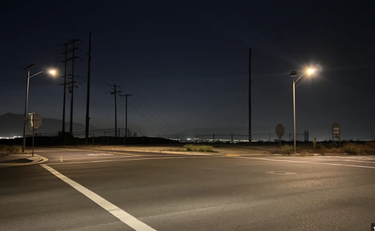
The first filter is location. Off-grid street lighting is often where municipal solar street light systems make the most immediate sense. Remote roads, rural communities, border areas, and newly developed zones face high costs for trenching, cabling, transformers, and grid extension. In these cases, the capital expense of grid connection frequently exceeds the cost of standalone solar street lights.
Cities evaluate feasibility by comparing lifecycle infrastructure costs rather than unit pricing. A solar street lighting project that avoids kilometers of underground cabling, ongoing electricity bills, and grid maintenance can justify itself even with higher upfront hardware costs. Reliability also matters. In areas with unstable grids or frequent outages, off-grid street lighting becomes a resilience asset rather than a compromise.
Planners also examine installation speed and disruption. Solar street lights can be deployed without road excavation, reducing traffic disruption and political friction. For municipalities under tight project timelines, this practical advantage often tips feasibility decisions.
Climate and Solar Resource Assessment for Solar Street Lights
Once site suitability is established, cities move to climate and solar resource analysis. This step separates optimistic proposals from operationally viable systems. Municipal engineers rely on historical solar irradiance data, seasonal daylight variation, temperature ranges, and weather patterns rather than average sunshine claims.
Battery performance is scrutinized alongside panel output. Cold climates reduce battery efficiency, while high heat accelerates battery degradation. Dust, snow cover, monsoon seasons, and coastal humidity all factor into system sizing decisions. A credible solar street lighting project demonstrates autonomy during worst-case scenarios, not annual averages.
This is where experience and expertise matter. Cities increasingly demand performance simulations, multi-day autonomy calculations, and clear explanations of how luminaires, panels, controllers, and batteries interact as a system. A solar street light factory that can document real-world deployments in comparable climates carries more authority than one relying on laboratory specifications alone.
ROI and Payback Analysis for Solar Street Lighting Projects
The final gate is financial logic. Solar lighting ROI is evaluated across the full project lifecycle, not just installation. Municipal finance teams compare capital expenditure against avoided electricity costs, reduced maintenance, and extended service life.
Payback periods vary by region, but cities often target medium-term returns that align with infrastructure budgeting cycles. Eliminating monthly energy bills is a measurable benefit. Reducing truck rolls, cable failures, and grid-related outages further strengthens the case.
Risk adjustment is part of the calculation. Projects with proven components, conservative energy assumptions, and stable suppliers score higher than aggressively optimized designs. This is why procurement teams favor manufacturers with consistent quality control, standardized designs, and long-term support capacity.
Environmental and policy incentives also feed into ROI. Carbon reduction targets, renewable mandates, and public sustainability commitments translate into political and regulatory value, even when not directly monetized.
Why Cities Move from Evaluation to Implementation
When feasibility, climate performance, and financial modeling align, solar street lighting projects transition from pilot to scale. At this stage, cities prioritize system reliability, documentation, and supplier accountability over novelty.
Well-designed Solar Street Lights function as integrated infrastructure: lighting, power generation, energy storage, and control in a single system. For municipalities, the objective is predictable performance over decades rather than experimental technology. Infralumin, as a professional solar street light factory, supports this requirement by offering engineering-driven system design, climate-adapted configurations, and documented experience in municipal solar street lighting projects. By aligning product reliability, transparent specifications, and long-term project support, Infralumin enables cities to convert evaluation models into scalable, low-risk off-grid street lighting deployments with measurable solar lighting ROI.

Zhongshan Lumin Technology Co., Ltd. is a renowned high-tech enterprise specializing in the research, development, and manufacturing of industrial LED lights.
Contact
@2026 Zhongshan Lumin Technology Co., Ltd.