

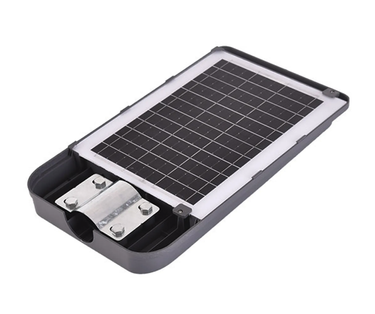
Solar Street Light for Cost-Sensitive Projects
Public lighting projects rarely fail because of technology. They fail because cost assumptions collapse over time. Initial pricing, installation complexity, energy volatility, and maintenance burden all compound. For cost-sensitive projects, especially in emerging markets and large-scale EPC delivery, solar street lighting has shifted from an environmental gesture to a financial instrument.
An economical solar street light is no longer defined by the cheapest unit price. It is defined by predictable output, minimized lifecycle cost, and deployment efficiency across hundreds or thousands of poles.
Cost-Effective Solar Street Light Solution for EPC Projects
EPC contractors operate under rigid financial structures. Capital expenditure must be controlled at the procurement stage, while operational risk must remain low over the project lifecycle. Solar lighting for projects fits this framework when system integration is done correctly.
All-in-one solar street light designs reduce component fragmentation. Battery, controller, panel, and luminaire are pre-matched, eliminating design mismatches that inflate failure rates. For EPC teams, this simplifies BOQ preparation, logistics planning, and on-site installation. Fewer components translate directly into lower labor hours and reduced commissioning errors.
From experience in large infrastructure tenders, the most successful budget solar street lighting deployments favor standardized wattage ranges, modular mounting systems, and conservative lighting profiles rather than peak lumen marketing. Predictability beats theoretical maximums. This approach stabilizes delivery timelines and avoids cost overruns during acceptance testing.
Stable Output Solar Street Lighting for Municipal Roads
Municipal road authorities care less about novelty and more about uniformity. Lighting output must remain stable across seasons, traffic loads, and weather patterns. Inconsistent illumination creates safety liabilities and public complaints, both of which carry financial consequences.
Modern commercial solar light systems now use regulated output profiles rather than simple dusk-to-dawn discharge. Intelligent controllers maintain consistent lumen levels during peak traffic hours and taper output during low-use periods. This preserves battery health and ensures lighting compliance without oversizing components.
For municipal roads, stable output also supports regulatory approval. Authorities increasingly evaluate lighting projects on measured performance, not brochure specifications. Reliable photometric data, verified battery cycles, and real-world deployment records establish trust. That trust is central to authoritativeness in public procurement.
Low-Maintenance Solar Street Light for Budget Projects
Maintenance is where cheap systems become expensive. Battery replacement schedules, controller failures, and panel degradation silently consume operational budgets. A truly economical solar street light minimizes intervention over its service life.
Low-maintenance design starts with lithium battery selection optimized for shallow daily cycles rather than deep discharge. It continues with sealed optical systems that resist dust ingress and humidity. It ends with thermal management that protects electronics from long-term degradation.
From a lifecycle perspective, budget solar street lighting succeeds when maintenance intervals exceed five years and failure rates remain statistically insignificant across installations. This is where experience matters. Vendors with real deployment data, not just factory tests, deliver systems that align with municipal and commercial expectations.
Practical Deployment: Infralumin SSE01 Solar Street Light
For projects requiring controlled budgets without sacrificing reliability, the SSE01 LiFePO4 Battery Solar Street Light from Infralumin reflects these principles in practice. Its integrated structure reduces installation time, while its regulated output ensures consistent road illumination across varying conditions. The system is designed for municipal roads, EPC projects, and commercial solar light applications where cost discipline is mandatory.
As an all in one solar street light manufacturer, Infralumin focuses on matching component longevity with real project demands, not marketing extremes. The SSE01 supports scalable deployment, predictable performance, and reduced maintenance exposure—key requirements for cost-sensitive infrastructure projects operating under tight financial oversight.
In solar lighting for projects, long-term economics determine success. When design, output stability, and maintenance discipline align, solar street lighting becomes not just affordable, but strategically efficient.

Zhongshan Lumin Technology Co., Ltd. is a renowned high-tech enterprise specializing in the research, development, and manufacturing of industrial LED lights.
Contact
@2026 Zhongshan Lumin Technology Co., Ltd.