

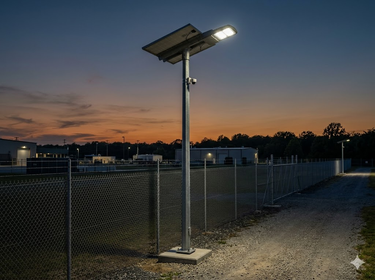
Reducing Theft & Vandalism Risks in Solar Lighting Projects
When municipalities, facility managers, and commercial developers invest in off-grid infrastructure, the primary focus naturally falls on energy efficiency, illumination metrics, and long-term cost savings. However, the financial modeling for these installations frequently overlooks a highly disruptive variable: component theft and intentional property damage. Establishing robust outdoor solar lighting security is not merely an optional upgrade; it is a fundamental requirement for protecting capital investments. Because these off-grid systems often operate in remote or unsupervised areas and contain high-value components like high-capacity lithium batteries and photovoltaic panels, they present an attractive target for opportunistic theft. Addressing these vulnerabilities requires a comprehensive engineering approach that integrates mechanical defenses, structural resilience, and intelligent monitoring directly into the product design.
The Hidden Costs: Evaluating Solar Project Risk
To effectively secure off-grid infrastructure, project engineers must first understand the specific vulnerabilities inherent in these systems. Any solar project risk calculation must account for the reality that the sum of the components is often highly valuable on the secondary market. The transition from heavy, cumbersome lead-acid batteries to compact, lightweight LiFePO4 (Lithium Iron Phosphate) battery packs has drastically improved lighting performance and lifespan, but it has also made the power storage units much easier to carry away. Similarly, high-efficiency monocrystalline solar panels and internal copper wiring are frequently targeted for scrap value.
Beyond the immediate loss of hardware, the true cost of theft and vandalism includes emergency replacement labor, expedited shipping for new components, and the operational liability of having unlit public spaces or commercial properties. A compromised street light in a public park or industrial perimeter creates immediate safety hazards and potential legal liabilities for the property owner. Therefore, mitigating these threats requires moving beyond standard commercial lighting specifications and implementing military-grade or high-security design philosophies from the very beginning of the procurement process.
Anti-theft design for solar street light installations
Designing a secure system requires a multi-layered approach that frustrates unauthorized access, delays removal attempts, and increases the likelihood of detection. Implementing a rigorous solar street light anti-theft strategy begins at the mechanical and structural level, ensuring that critical components are either physically inaccessible or securely locked within the luminaire housing.
Effective physical and hardware-based deterrents include:
- Elevated Component Integration:Traditional solar setups often utilized buried battery boxes or lower-pole enclosures, which are easily accessible with basic hand tools. Modern All-in-One or All-in-Two designs integrate the battery and intelligent controller directly behind the LED module or beneath the solar panel at the top of the pole (typically 6 to 10 meters high). This height forces thieves to use heavy machinery or bucket trucks, dramatically increasing the visibility and difficulty of the theft.
- Proprietary and Tamper-Proof Fasteners:Standard Phillips or hex bolts offer zero resistance to a prepared thief. Secure installations utilize specialized security hardware, such as pin-in-Torx screws, snake-eye drives, or shear nuts that snap off during installation, leaving a smooth, un-grippable dome. These fasteners require proprietary driver bits that are tightly controlled and not available at standard hardware stores.
- Internal Routing and Armored Cabling:Exposed wiring connecting the photovoltaic panel to the luminaire is a primary failure point, easily severed by vandals. Secure designs route all cabling internally through the mounting arm and the pole itself. Where internal routing is impossible, stainless steel armored conduit prevents cutting and tampering.
- GPS and BMS Tracking Integration:Advanced anti-theft protocols now utilize the software embedded within the Battery Management System (BMS). Micro-GPS trackers can be integrated directly into the battery casing. If the battery is disconnected from the charge controller without authorization, the system can utilize residual power to ping its location to a central dashboard, enabling asset recovery.
Vandal-resistant solar street lighting structures
While theft is financially motivated, vandalism is often random and destructive. Designing for this reality requires specifying materials that can absorb severe mechanical impacts without compromising the internal electronics or optics. A standard commercial luminaire may survive heavy rain, but it will shatter instantly under the impact of a thrown rock or a struck bat.
To achieve true durability, engineers must look to the IK impact resistance rating system (EN 62262). For public parks, remote highways, and industrial perimeters, vandal-resistant lighting must achieve a minimum rating of IK08, with IK10 (capable of withstanding a 20-joule impact, equivalent to dropping a 5kg mass from 400mm) being the gold standard.
Reaching this level of structural integrity requires specific material choices. The housing must be constructed from heavy-duty die-cast aluminum (such as ADC12) rather than thin extruded aluminum or plastics. Die-cast aluminum provides exceptional rigidity and serves as a superior heat sink for the LED chips, maintaining thermal stability even within a heavily armored enclosure. For the optical lenses, standard tempered glass—while scratch-resistant—remains too brittle for high-vandalism areas. High-impact optical-grade polycarbonate (PC) or specialized IK10-rated acrylics are mandatory. These polymers will flex and absorb kinetic energy rather than shattering, ensuring the light distribution remains functional even after a direct strike.
Structural Integrity Comparison
To highlight the engineering differences between standard and high-security fixtures, the following table breaks down the critical material specifications required for vandal resistance.
| Component | Standard Commercial Lighting | High-Security / Vandal-Resistant Standard |
| Housing Material | Extruded Aluminum / ABS Plastic | Heavy-duty Die-cast Aluminum (ADC12) |
| Impact Rating | IK05 - IK06 | IK08 - IK10 |
| Optical Lens | Standard Glass / Basic PMMA | High-Impact Polycarbonate (PC) |
| Ingress Protection | IP65 | IP66 - IP67 (Protects against pressure washing) |
| Access Latches | Exposed external clips | Concealed internal latches / Tool-less secure entry |
| Mounting Brackets | Standard slip-fitter | Reinforced heavy-gauge steel / Cast aluminum |
Balancing Security with Tool-Less Maintenance
One of the greatest engineering challenges in B2B luminaire design is resolving the inherent conflict between robust security and ease of street light maintenance. Municipal contractors require tool-less entry systems to reduce labor time when replacing LED drivers or upgrading smart modules. However, a fixture that is easy for a technician to open is theoretically easy for a vandal to open.
Leading manufacturers resolve this through concealed latching mechanisms. By designing flush-mounted, spring-loaded internal latches that require a specific sequence of pressure points or a proprietary master key to release, the luminaire remains completely sealed to the casual observer. The die-cast housing features overlapping lips and continuous silicone gaskets that prevent thieves from wedging pry bars into the seams. This ensures that the high IP/IK ratings are maintained over the 15-year lifespan of the fixture, while still allowing authorized personnel to perform rapid, tool-less internal maintenance when necessary.
Monitoring strategies to protect solar lighting assets
Passive physical defenses are highly effective, but they are ultimately static. The most secure off-grid projects combine physical hardening with active, real-time monitoring. By leveraging IoT (Internet of Things) connectivity, a solar street lighting network transforms from a collection of isolated poles into a cohesive, self-reporting security grid.
Implementing active monitoring requires integrating smart controllers and communication nodes (such as LoRaWAN, NB-IoT, or Zigbee) into each luminaire. These strategies include:
- Real-time Telemetry and Voltage Drop Alarms:The charge controller continuously monitors the voltage from the solar panel and the current flowing into the battery. If a vandal covers the panel, cuts a wire, or attempts to physically remove the battery pack, the system detects an instant, unnatural drop in voltage. The Central Management System (CMS) instantly triggers an alert to maintenance crews or local security, pinpointing the exact pole via GPS coordinates.
- Vibration and Tilt Sensors:Accelerometers embedded in the luminaire or the pole itself can detect anomalous mechanical shocks. If a vehicle strikes the pole, or if a vandal attempts to cut down the structure using power saws, the vibration signature triggers an immediate high-priority alarm before the fixture is fully compromised.
- Adaptive Motion Lighting paired with Camera Modules:Integrating microwave or PIR motion sensor serves a dual purpose. From an energy standpoint, it conserves battery life by keeping the light at 30% output until motion is detected. From a security standpoint, a light suddenly blasting to 100% brightness startles intruders. When paired with low-draw, edge-computing camera modules, this motion trigger can simultaneously initiate localized video recording, capturing evidence of the tampering attempt.
- Geofencing Asset Protection:For construction sites or temporary industrial deployments, the CMS can establish a digital perimeter. If a luminaire is moved outside this designated GPS boundary—indicating a theft in progress—the system alerts administrators and can even lock down the battery's BMS, rendering the stolen unit entirely inoperable and worthless to the thief.
Securing Your Investment with Expert Manufacturing
Protecting off-grid lighting infrastructure is not an afterthought; it is an engineering discipline. For procurement officers, city planners, and B2B contractors, selecting a manufacturing partner capable of executing these high-security designs is critical to the long-term viability of the project.
Infralumin addresses these complex challenges through rigorous OEM/ODM customization and uncompromising quality control. By leveraging heavy-duty die-cast aluminum housings, high IK-rated polycarbonate optics, and secure internal architectures, our luminaires are engineered to withstand both the elements and intentional abuse. Furthermore, our deep partnerships with international component brands allow us to seamlessly integrate the intelligent monitoring systems and smart controllers required for active asset protection. Investing in robust security at the manufacturing stage ensures that your solar lighting projects deliver reliable, continuous illumination, protecting both the public space and your bottom line.

Zhongshan Lumin Technology Co., Ltd. is a renowned high-tech enterprise specializing in the research, development, and manufacturing of industrial LED lights.
Contact
@2026 Zhongshan Lumin Technology Co., Ltd.