

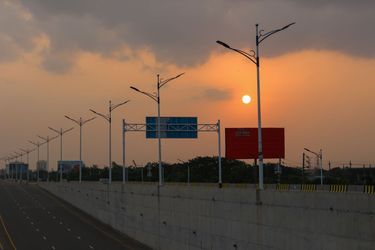
High ambient temperatures can affect the operating conditions of LED street lights, particularly their drivers and other temperature-sensitive components. In regions with long, hot summers, intense sunlight, and limited nighttime cooling, selecting a suitable luminaire requires more than checking its rated wattage or IP protection level.
For road lighting designers, contractors, and procurement teams, the key is to verify whether a luminaire can operate within the project's temperature conditions and maintain the required lighting performance over time.
This guide explains how to evaluate LED street lights for hot climates, from defining site requirements to reviewing product specifications and supplier documentation.
Step 1: Define the High-Temperature Requirements of the Project
Before comparing products, establish the environmental conditions in which the street lights will operate. The maximum ambient temperature is an important starting point, but it should not be the only consideration.
Identify the Maximum Ambient Temperature
Check the highest expected outdoor temperature at the installation site, particularly during the hottest months. Project teams should consider local climate records and any specific temperature requirements stated in the lighting specification.
Ambient temperature refers to the air temperature surrounding the luminaire. It is different from the internal temperature of components such as the LED board and driver, which can become hotter during operation.
The selected luminaire should have a specified operating temperature range that covers the project's expected conditions.
Consider Operating Hours and Installation Conditions
Street lights typically operate at night, but their thermal conditions can still be influenced by the surrounding environment. Daytime solar exposure may heat the luminaire housing before operation, while limited airflow around the installation can affect heat dissipation.
Also consider:
- Operating schedule: Long nightly operating hours can increase the importance of thermal performance and component reliability.
- Installation location: Pole height, mounting orientation, nearby structures, and airflow can influence the conditions around the luminaire.
- Local environment: Dust, strong UV exposure, coastal salt, and airborne pollutants may create additional demands on outdoor materials and protective finishes.
These factors help establish the environmental conditions that suppliers should address when recommending a lighting solution.
Step 2: Verify the Product's Temperature and Protection Specifications
Once the project requirements are clear, review the complete luminaire specifications. Pay particular attention to the operating temperature range, thermal design, driver information, and component ratings.
Check the Complete Luminaire Operating Temperature Range
The operating temperature range indicates the ambient conditions under which a luminaire is specified to function. Check that the stated range covers the project's expected minimum and maximum temperatures.
For example, Infralumin's IP66 Smart LED Street Light specifies an operating temperature range of -30°C to 50°C. This provides a reference for evaluating whether the stated operating conditions align with a project's climate requirements.
Important: An operating temperature range does not automatically confirm that the luminaire maintains its full rated power or luminous flux at every temperature within that range. If consistent output at high ambient temperatures is important, request supporting performance information from the manufacturer.
Review Thermal Design and Heat Dissipation
The luminaire's thermal design helps manage the heat generated by LEDs and other electrical components. Housing material, surface area, structural design, and internal component layout can all influence how effectively heat is transferred away from temperature-sensitive parts.
Aluminum housings are commonly used in outdoor LED luminaires because of their thermal properties. However, material alone does not establish overall thermal performance. The complete design and the operating conditions need to be considered together.
Check Driver Temperature Limits and Thermal Derating
The LED driver is an important component to assess because its operating limits can affect luminaire performance and reliability. Review the manufacturer's stated temperature limits and any available information about output behavior under elevated temperatures.
Thermal derating is one possible strategy used in some driver designs. Depending on the product, a driver may reduce output power when a specified temperature threshold is reached to help protect internal components. Other designs may use different thermal protection methods.
Do not assume that every LED street light automatically reduces its output at high temperatures. The response depends on the driver and luminaire design. Ask the supplier whether thermal derating applies, under what conditions it occurs, and whether output or power data are available.
Check LED and Component Ratings
LED lumen maintenance data can help buyers assess how luminous output is expected to change over time under specified operating conditions. Component temperature ratings also provide useful information about the limits within which the driver, LEDs, and other electrical parts are designed to operate.
When reviewing these specifications, check the stated test conditions and assumptions. Data obtained under different temperatures or operating conditions should not be treated as directly comparable.
Review Environmental Protection Separately
High-temperature suitability should not be confused with ingress protection. An IP66 rating indicates protection against dust ingress and powerful water jets under the applicable test conditions. It does not demonstrate heat resistance, UV resistance, or corrosion resistance.
For projects in hot and dusty, coastal, or high-UV environments, review the relevant material specifications, surface treatments, and available test information separately.
Step 3: Compare Products and Verify Supplier Documentation
After checking individual product specifications, compare shortlisted luminaires against the same project requirements. A supplier's rated wattage or maximum luminous efficacy alone is not enough to establish suitability for a hot-climate installation.
Compare Light Output Under Relevant Operating Conditions
Start with the rated power, luminous flux, and luminous efficacy stated in each product datasheet. Then determine whether the supplier provides information about performance at elevated ambient temperatures.
Where available, review high-temperature output data, driver operating limits, and derating information. This helps establish whether the proposed luminaire can meet the project's lighting requirements under the expected conditions.
If the supplier only provides standard rated output without high-temperature performance data, do not assume that the same output is maintained at the maximum specified ambient temperature.
Photometric files, such as IES or LDT files, can also support lighting calculations. Use the appropriate photometric data to assess road classification, pole spacing, mounting height, and required illuminance or luminance. Confirm whether the data represent the operating conditions relevant to the project.
Request Supporting Documents from Suppliers
A practical supplier review should cover more than a product brochure. Ask manufacturers for documentation that allows the technical team to verify the key specifications.
The following checklist can help structure the evaluation:
- Complete product datasheet: Confirm rated power, luminous flux, efficacy, operating temperature range, IP rating, and other specified product parameters.
- Driver specifications: Check the driver model, operating temperature limits, and available thermal protection or derating information.
- High-temperature test reports: Request applicable test reports or documented performance data, including test temperatures and conditions.
- LED lumen maintenance information: Review the stated maintenance data and the conditions under which they were established.
- Photometric files: Obtain IES or LDT files for lighting simulation and project calculations.
- Material and protection information: Verify relevant details about housing materials, surface finishes, UV exposure, and corrosion protection.
- Project references: Ask for examples of installations in climates with similar temperature and environmental conditions, where available.
Not every supplier will provide every document. However, missing information should be identified rather than treated as proof that a product meets a particular performance requirement.
Use a Consistent Evaluation Checklist
When comparing shortlisted products, use the same criteria for each supplier:
| Evaluation Item | What to Verify |
|---|---|
| Operating temperature | Does the specified range cover the project's conditions? |
| Rated performance | Are power and luminous flux clearly documented? |
| High-temperature performance | Is supporting output or test information available? |
| Driver limits | Are temperature limits and protection strategies explained? |
| Thermal design | Are housing and heat-dissipation details provided? |
| Environmental protection | Are IP, UV, and corrosion-related claims supported separately? |
| Project suitability | Are photometric files and relevant project references available? |
This approach makes supplier comparisons more transparent and helps project teams identify where further technical clarification is needed before procurement.
Common Mistakes When Choosing LED Street Lights for Hot Climates
Several selection mistakes can lead to unsuitable products or unrealistic performance expectations:
- Choosing by IP rating alone: IP66 addresses dust and water ingress, not high-temperature performance.
- Treating the operating range as a performance guarantee: A stated maximum ambient temperature does not automatically mean full rated output is maintained at that temperature.
- Assuming all drivers use thermal derating: Thermal protection strategies vary by driver and luminaire design.
- Comparing rated lumens without checking conditions: Rated output should be interpreted alongside the temperature and test conditions under which it was measured.
- Ignoring the installation environment: Dust, UV exposure, coastal conditions, and limited airflow may introduce additional reliability considerations.
A more reliable selection process evaluates the complete luminaire against the project's environmental and lighting requirements.
Choose a Suitable LED Street Lighting Solution for Your Project
Selecting LED street lights for hot climates requires a clear understanding of site temperatures, product operating limits, thermal design, and actual lighting performance. Reviewing supplier documentation and comparing products under consistent criteria can help reduce uncertainty during specification and procurement.
Infralumin provides LED street lighting solutions for outdoor projects. Share your project location, expected ambient temperatures, lighting requirements, and installation conditions with our team to discuss a suitable solution.
Discuss Your Project