

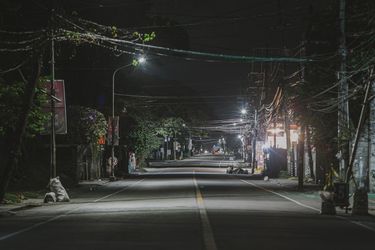
LED street lights are widely used in municipal and infrastructure projects because of their energy efficiency, long operating life, and relatively low maintenance requirements. However, a long rated lifespan does not mean that every luminaire will operate reliably for the same number of hours.
Over time, LED modules may experience lumen depreciation, drivers can fail, and outdoor exposure can affect electrical components, housing, and sealing performance. A street light may therefore require maintenance or replacement even when its LED light source has not reached its projected lifespan.
So, how long do LED street lights actually last? More importantly, how can municipalities and lighting professionals determine whether an aging fixture should remain in service, undergo component repair, or be replaced entirely?
Understanding the difference between rated LED lifespan and actual luminaire service life is the first step toward making informed maintenance and replacement decisions.
How Long Do LED Street Lights Last?
LED street lights are designed for long operating lives, but their rated lifetime varies depending on the LED package, luminaire design, operating conditions, and testing methods. High-quality LED lighting products are commonly expected to provide 30,000 to 50,000 operating hours or more. Some outdoor luminaires may carry higher lumen-maintenance projections, including 100,000 hours, when supported by product-specific test data.
These figures generally describe the expected maintenance of LED light output rather than a guaranteed maintenance-free service life for the complete luminaire. Actual operating life also depends on the driver, surge protection, electrical connections, thermal management, enclosure condition, and maintenance history.
Understanding L70 and L80 in LED Street Lighting
LED lifespan is often described using lumen maintenance metrics such as L70 and L80. These metrics indicate the percentage of initial luminous flux an LED source is expected to retain after a specified operating period.
- L70: The LED source retains 70% of its initial luminous flux.
- L80: The LED source retains 80% of its initial luminous flux.
For example, if an LED light source initially produces 20,000 lumens, its L70 point corresponds to an output of 14,000 lumens. At L80, the output would be 16,000 lumens.
A lifetime claim should therefore be read together with its operating period. For example, an L70 projection at 50,000 hours means the LED source is expected to retain at least 70% of its initial luminous flux at that projected time under the stated conditions.
LM-80 testing and TM-21 calculations are commonly used to assess and project LED lumen maintenance. When reviewing a product's lifetime claim, engineers should check the supporting test data and whether the TM-21 projection follows the applicable extrapolation limits. A projected LED source lifetime should not be treated as proof of the complete luminaire's service life.
L70 or L80 also does not automatically indicate when a street light stops working or must be replaced. A luminaire may continue operating after reaching its projected L70 point, provided its actual lighting performance still satisfies the applicable project requirements.
LED Light Source Lifespan vs. Actual Luminaire Service Life
The LED light source and the complete luminaire do not necessarily have the same service life. An LED module may have a projected L70 value of 100,000 hours, but the complete fixture contains several other components that influence operational reliability.
For example:
- LED driver: Regulates the electrical power supplied to the LED modules. Driver failure can interrupt normal operation even when the LEDs remain functional.
- Surge protection device (SPD): Helps protect electrical components against transient voltage surges but may require inspection or replacement after significant electrical disturbances.
- Electrical connections: Loose, damaged, or deteriorated connections can cause intermittent operation or complete failure.
- Housing and sealing components: Exposure to moisture, dust, temperature changes, and corrosion can affect enclosure integrity over time.
This explains why the rated lifespan of an LED light source does not guarantee the same maintenance-free operating period for the entire street light. For municipalities, the more useful question is not simply how many hours an LED street light can operate, but how long the complete luminaire can continue delivering reliable lighting that meets the required performance standards.
What Factors Affect LED Street Light Lifespan?
The actual service life of an LED street light depends on more than the quality of its LED chips. Thermal performance, electrical protection, component reliability, and environmental conditions all influence how the complete fixture performs over time.
Operating Temperature and Thermal Management
Heat is one of the main factors affecting LED performance and component reliability.
Although LEDs are more energy-efficient than many traditional light sources, they still generate heat during operation. If this heat is not effectively dissipated, the LED junction temperature can increase, accelerating lumen depreciation and potentially shortening component life.
The driver and other electronic components are also sensitive to operating temperature. Poor thermal management can increase electrical stress and contribute to premature failures.
For outdoor street lighting, thermal performance depends on several design considerations:
- Heat sink design and available heat dissipation area.
- Luminaire housing material and thermal conductivity.
- Internal component arrangement.
- Ambient temperature and installation environment.
A well-designed thermal management system helps maintain suitable operating temperatures and supports long-term luminaire reliability.
LED Driver and Electrical Component Quality
The LED driver plays an essential role in street light operation by converting and regulating electrical power for the LED modules.
Even when LED modules remain in good condition, a failed driver can cause flickering, intermittent operation, reduced output, or complete luminaire failure.
Driver reliability depends on factors such as component quality, operating temperature, electrical conditions, and overall product design. Project engineers should also consider whether the driver can be accessed and replaced without replacing the entire fixture.
For a closer look at how driver selection affects outdoor lighting performance, see our guide to LED driver reliability and service life in outdoor lighting.
Surge Protection and Voltage Fluctuations
Outdoor street lights are exposed to electrical disturbances, including lightning-related surges and voltage fluctuations. These events can damage drivers, control equipment, and other electronic components. Repeated electrical stress may also contribute to premature failures.
Surge protection devices help reduce the risk of damage by limiting transient overvoltage within their specified protection capabilities.
When selecting LED street lights, project engineers should evaluate the required surge protection level according to local electrical conditions, installation exposure, and project specifications. For example, 10kV and 20kV SPD options may be specified for different outdoor lighting applications, depending on the selected luminaire and project requirements.
Surge protection should be considered as part of the overall electrical protection strategy rather than a guarantee against every possible electrical failure.
Environmental Conditions and Luminaire Protection
Outdoor LED street lights must operate under changing environmental conditions. Moisture, dust, airborne contaminants, salt exposure, and vibration can gradually affect the housing, seals, electrical connections, and other components.
Two important specifications to consider are:
- IP rating: Indicates the level of protection provided against solid particles and water ingress under defined test conditions. IP66-rated luminaires provide dust-tight protection and protection against powerful water jets.
- IK rating: Indicates resistance to mechanical impacts. IK10 is a commonly specified level for outdoor luminaires exposed to demanding physical environments.
These ratings help engineers evaluate whether a luminaire is suitable for its intended installation conditions. However, they do not eliminate the need for maintenance or guarantee a specific service life. The required IP and IK levels should be confirmed against the selected product model and project specifications.
What Are the Signs of LED Street Light Deterioration or Failure?
LED street light deterioration does not always result in complete failure. Some problems develop gradually, while others appear suddenly due to electrical or mechanical damage. Recognizing these symptoms helps maintenance teams identify potential problems before they affect a larger section of the lighting system.
| Observable Symptom | Possible Cause | What to Check |
|---|---|---|
| Reduced brightness | LED lumen depreciation or optical deterioration | Light output and photometric performance |
| Flickering or intermittent operation | Driver or electrical connection problems | Driver, wiring, and connections |
| Partial LED failure | LED module or circuit damage | LED board and electrical connections |
| Complete light failure | Driver failure, power supply issue, or LED module failure | Power supply and internal components |
| Water ingress or condensation | Damaged seals or cable entries | Housing, gaskets, and cable entries |
| Repeated electrical failures | Surge events, overheating, or component deterioration | SPD, driver, and thermal conditions |
Lumen Depreciation vs. Luminaire Failure
Lumen depreciation and luminaire failure require different maintenance responses. Lumen depreciation is a gradual reduction in light output, while luminaire failure involves a component or electrical problem that prevents the fixture from operating as intended.
For gradual brightness reduction, maintenance teams should assess actual light output and road lighting performance. For flickering, intermittent operation, or complete failure, electrical inspection may be needed to identify problems with the driver, LED module, or connections.
A fixture that still switches on should not automatically be considered serviceable. Its lighting performance must continue to meet the applicable project requirements.
How Do You Know When an LED Street Light Needs Replacement?
Determining when to replace LED street lights requires more than checking their operating hours or identifying visible damage.
For municipal lighting systems, replacement decisions should consider four areas: actual lighting performance, component condition, maintenance history, and the availability and cost of replacement parts. Evaluating these factors together helps engineers distinguish between fixtures that can continue operating, those that need component repair, and those that have reached the point where full luminaire replacement is more appropriate.
Assess Actual Lighting Performance
Lighting performance is one of the most important indicators of whether an LED street light remains suitable for its application.
A luminaire may still function electrically but no longer provide adequate illumination because of lumen depreciation, optical deterioration, or changes in the surrounding environment.
Engineers should evaluate:
- Illuminance or luminance: Measure the relevant lighting parameters according to the road classification and applicable design requirements.
- Uniformity: Check whether illumination remains sufficiently consistent across the road surface.
- Glare: Assess whether the lighting system continues to provide acceptable visual comfort and glare control.
- Light distribution: Identify whether changes in optical performance have affected the intended distribution of light.
Inspection results should be compared with the original lighting design and applicable current project requirements.
For example, an LED street light that has experienced some lumen depreciation may still provide adequate road illumination if the original design included sufficient performance margins. However, if measured lighting performance falls below the required levels, the fixture or lighting system may need corrective action.
This is why L70 should not be treated as an automatic replacement threshold. The decision should be based on actual road lighting performance rather than a single lumen-maintenance figure.
For further guidance on evaluating road lighting performance, see our article on road lighting calculation and DIALux verification.
Inspect Electrical and Mechanical Components
When a street light shows signs of deterioration, inspect its critical components to determine whether the problem can be isolated and repaired.
- LED driver and electrical connections: Check for overheating, unstable operation, damaged wiring, and loose connections. An isolated driver failure may be repairable if the LED module remains functional.
- Surge protection device: Check its condition and status indicators according to manufacturer instructions. Replace damaged protection components where necessary.
- LED modules and optical components: Assess visible damage, partial failure, and whether the module can still deliver the required lighting performance.
- Housing and sealing structure: Examine corrosion, cracks, damaged gaskets, water ingress, and cable entries. Extensive structural deterioration may make full replacement more appropriate.
The key consideration is whether the fault is limited to a replaceable component or affects the overall safety, reliability, and performance of the luminaire.
Review Maintenance and Failure Records
Maintenance records provide information that cannot always be identified through a single visual inspection.
For example, one failed driver may represent an isolated component problem. However, repeated driver failures across the same installation area or product batch may indicate a wider reliability issue.
Municipalities and maintenance contractors should review:
- Installation dates and luminaire models.
- Driver and LED module replacement history.
- Frequency and type of reported failures.
- Previous electrical or environmental damage.
- Inspection results and recurring performance issues.
A pattern of repeated failures may indicate that continued repairs will become increasingly difficult to justify. Maintenance history is particularly useful for large street lighting networks, where individual fixtures may appear functional even though a particular model or installation area is experiencing recurring problems.
Evaluate Repair Costs and Spare Parts Availability
Even when a luminaire can technically be repaired, continued maintenance may not always be practical.
Before deciding whether to repair or replace a fixture, engineers should evaluate the following:
- Replacement component availability: Are compatible drivers, LED modules, and other critical components still available?
- Repair costs: What are the costs of parts, labor, equipment access, and traffic management?
- Expected remaining service life: After repair, is the complete luminaire likely to provide reliable operation for a reasonable period?
- Warranty and technical support: Does the manufacturer still provide relevant replacement parts and technical assistance?
- Performance after repair: Can the repaired fixture meet the required lighting and operational specifications?
For example, replacing a failed driver may be a practical solution when the LED module, housing, and optical system remain in good condition.
However, if several components have deteriorated, the housing has suffered extensive corrosion, and compatible spare parts are difficult to obtain, repeated repairs may provide limited long-term value.
A Practical Framework for LED Street Light Replacement Decisions
The following framework can help municipalities and lighting engineers organize inspection findings and determine the appropriate next step.
| Assessment Result | Recommended Action |
|---|---|
| Lighting performance meets requirements and components remain stable | Continue operation and routine inspection |
| Isolated driver failure with an otherwise healthy luminaire | Inspect and consider driver replacement |
| Damaged sealing components with repairable housing | Repair and restore enclosure protection |
| Gradual lumen depreciation but lighting requirements are still met | Monitor performance and reassess as needed |
| Repeated component failures or extensive deterioration | Evaluate full luminaire replacement |
| Severe housing deterioration or lighting performance below requirements | Consider full replacement |
No single factor should determine the decision in isolation.
A fixture with a relatively high operating-hour count may still be suitable for continued use if it meets the required lighting performance and its components remain reliable. Conversely, a newer luminaire may require replacement if it has suffered severe damage or cannot meet the project's operational requirements.
Ultimately, an LED street light should be considered for replacement when it can no longer reliably meet the required lighting performance, operational requirements, or maintenance expectations. For larger municipal projects, this assessment also helps maintenance teams identify recurring problems and plan replacement work based on actual fixture conditions rather than arbitrary age limits.
How to Maintain LED Street Lights and Extend Their Service Life
A structured maintenance approach helps identify deterioration early, address component failures, and maintain consistent road lighting performance. The appropriate inspection frequency depends on manufacturer recommendations, environmental conditions, project specifications, and the operating history of the lighting system.
Conduct Routine Visual and Electrical Inspections
Visual inspections can help identify problems such as damaged housings, loose mounting components, corrosion, water ingress, and deteriorated seals. Electrical inspections should focus on relevant connections, drivers, protection devices, and other components according to appropriate maintenance procedures. Any work involving electrical components should follow local safety requirements and manufacturer instructions.
Monitor Lighting Performance
Changes in brightness or light distribution may indicate lumen depreciation, optical deterioration, or component problems. Where appropriate, periodic illuminance or luminance measurements can help maintenance teams identify whether the road lighting system continues to meet its design requirements. Comparing inspection results over time also makes it easier to identify gradual performance changes.
Replace Faulty Components with Compatible Parts
When an individual component fails, replacement may be more practical than installing an entirely new luminaire. However, replacement drivers, LED modules, and electrical components must be compatible with the original system. Compatibility should consider electrical ratings, operating current, voltage, dimming requirements, thermal conditions, and physical installation requirements. Using unsuitable components can introduce additional reliability problems rather than resolving the original fault.
Keep Maintenance and Replacement Records
Maintain records of installation dates, luminaire models, inspection findings, reported failures, and component replacements. Comparing these records over time helps identify recurring faults and evaluate the reliability of different luminaire models.
For larger lighting networks, consistent records also support maintenance budgeting and help procurement teams plan future replacement projects.
Choosing LED Street Lights with Long-Term Reliability in Mind
The expected service life of a street lighting system depends on the complete luminaire design, not just the rated lumen maintenance of its LED modules.
For municipalities and contractors planning new installations or replacing aging fixtures, product selection should consider thermal management, electrical protection, enclosure durability, component quality, and future maintenance requirements.
Infralumin provides LED street lighting solutions for municipal, infrastructure, and commercial projects. Product specifications and configurations can be reviewed according to the installation environment, technical requirements, and project tender.
Depending on the selected model and project requirements, the following options and technical support can be evaluated:
- Housing and thermal design: Die-cast aluminum housing options support structural durability and heat dissipation.
- Ingress and impact protection: IP protection levels and IK impact ratings can be specified according to the selected luminaire and installation conditions. IP66 and IK10 requirements should be confirmed for the specific model and configuration.
- Surge protection: 10kV and 20kV SPD options can be evaluated according to local electrical conditions and project specifications.
- Lighting design support: Relevant photometric files and DIALux simulation support can help engineers assess light distribution, illuminance, luminance, and uniformity for specific road layouts.
- Compliance documentation: Applicable certifications and test documents should be verified for the selected product model and configuration.
For long-term municipal lighting projects, it is also important to review warranty coverage, driver and LED module replacement options, spare parts availability, and after-sales technical support.
Selecting a luminaire with suitable specifications and accessible components can make future inspection, maintenance, and repair more manageable.
Explore Infralumin LED Street Lighting Solutions
Review project-oriented products and discuss luminaire configurations, technical specifications, and lighting requirements for your municipal or infrastructure project.
View LED Street Lighting SolutionsConclusion
The actual service life of an LED street light depends on its design, operating environment, component reliability, and maintenance history. The rated lifespan of an LED source alone cannot determine how long the complete luminaire will remain suitable for road lighting.
Municipalities and lighting professionals should base replacement decisions on measured lighting performance, component condition, recurring failures, and the availability and cost of repairs.
A condition-based approach helps extend the useful life of serviceable luminaires while identifying when component repair or full replacement is necessary. Combined with appropriate product selection and maintenance planning, it supports more reliable road lighting and better long-term infrastructure costs.