

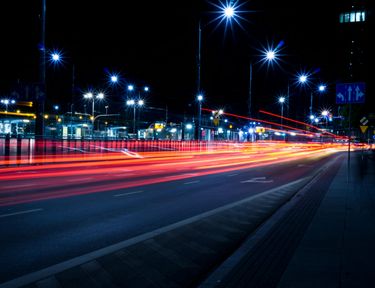
What Is the Best Color for Street Lights? A Complete Guide to Modern Outdoor Lighting
Choosing the best color temperature for street lights is a key part of designing safe, energy-efficient, and visually comfortable outdoor environments. From residential roads to highways and industrial zones, the right lighting color affects visibility, safety, energy consumption, and even community satisfaction. With LED technology now dominating the outdoor lighting industry, cities and businesses have more control than ever over color temperature, lumen output, and beam distribution.
This article explains the difference between yellow and white street lights, what lumens mean for outdoor lighting performance, how to choose between 3000K, 4000K, and 6000K, and what a Type II LED street light is—helping you decide the most effective solution for your project.
Should Street Lights Be Yellow or White?
For years, traditional sodium lamps produced the familiar “yellow light” seen in many older roadways. Today, LED street lights offer a spectrum of white light options, but the debate still continues: yellow vs. white street lighting— which is better?
Yellow Light (Warm White 2700K–3000K)
- Produces a warm, softer glow
- Reduces glare and light pollution
- Feels more comfortable in residential areas
- Provides weaker color rendering and slightly lower visibility for fast-moving traffic
White Light (Neutral to Cool White 4000K–6000K)
- Offers higher brightness and clarity
- Improves visibility and reaction time
- Enhances camera performance for smart city monitoring
- Better suited for commercial roads, highways, and high-traffic areas
For modern outdoor lighting, most cities prefer 4000K LED street lights because they provide a balance of brightness, comfort, safety, and energy efficiency.
What Is Lumen for a Street Light?
While wattage measures power consumption, lumens measure brightness. A higher lumen output means more visible light, making lumens one of the most important specifications for street lighting.
When selecting an LED street light, consider:
- Road width and height of poles
- Required brightness level for the area
- Uniformity and beam angle distribution
For example:
- Local streets generally require 4,000–8,000 lumens
- Main roads and avenues may need 10,000–20,000 lumens
- Highways require 20,000 lumens or above
Choosing a high-efficiency fixture—such as 180 lm/W LED street lights—allows municipalities to achieve higher brightness while reducing energy consumption.
3000K, 4000K, and 6000K — Which Is Better for Outdoor Lighting?
LED street lights are commonly available in different color temperatures:
3000K (Warm White):
Best for parks, pathways, residential streets, and areas requiring low glare and a cozy ambiance.
4000K (Neutral White):
Ideal for public roads, urban streets, and parking lots. Provides a balanced color tone that improves visibility without producing harsh light.
6000K (Cool White/Daylight):
Suitable for industrial zones, highways, and places that require maximum clarity. Offers the highest visibility but may increase glare if not properly shielded.
For most outdoor street lighting applications, 4000K is considered the most practical and widely adopted choice, combining comfort, safety, and visual accuracy.
What Is a Type II LED Street Light?
Street lights are often categorized by optical distribution types. A Type II LED street light provides a long, slightly oval-shaped beam pattern designed for:
- Narrow roadways
- Side streets
- Pathways and alleys
- Wide sidewalks
- Perimeter lighting
The light spreads laterally up to 25°, making it perfect for roads with a width approximately equal to the mounting height. This distribution reduces dark spots and increases uniformity, which is crucial for road safety and pedestrian comfort.
Conclusion: Choosing the Best LED Street Light for Modern Cities
The best color for street lights depends on the application:
- 3000K for comfort,
- 4000K for balanced visibility,
- 6000K for maximum brightness.
Paired with the right lumen output and optical design—such as a Type II distribution—LED street lights can dramatically improve urban safety and energy efficiency.
If you're searching for a high-performance outdoor LED lighting solution, the Infralumin ASE01 LED Street Light is an excellent choice. With its external driver design, ultra-high efficiency of 180 lm/W, and versatile wall/pole mount options, it offers reliable illumination for streets, parking lots, and industrial areas. Its optical precision and durable construction make it a strong match for modern roadway lighting upgrades.

Zhongshan Lumin Technology Co., Ltd. is a renowned high-tech enterprise specializing in the research, development, and manufacturing of industrial LED lights.
Contact
@2026 Zhongshan Lumin Technology Co., Ltd.