

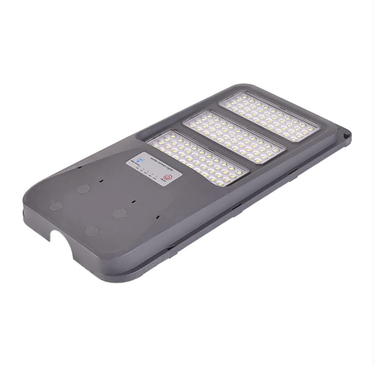
Peak Performance in Cloudy Regions: Solar Panel Sizing
Introduction
Designing efficient solar street lighting systems in regions with frequent cloud cover is a non-trivial engineering challenge. Unlike high-irradiance zones where energy generation margins are forgiving, cloudy regions impose tighter constraints on solar panel sizing, battery storage, and system autonomy. Poor sizing decisions can lead to underperformance, frequent outages, or excessive system costs.
For project engineers, procurement managers, and urban planners, the key lies in accurate solar energy planning, backed by reliable irradiance data and robust system design methodologies. This article explores how to optimize solar street light panel sizing, focusing on cloudy environments, and provides practical calculation methods, real-world city comparisons, and energy buffer strategies.
Solar Street Light Panel Sizing for Cloudy Regions
Understanding Solar Irradiance Variability
Solar panel sizing begins with Global Horizontal Irradiance (GHI), typically expressed in kWh/m²/day. In cloudy regions, GHI can fluctuate significantly due to:
- Seasonal monsoons
- Persistent cloud layers
- High humidity and atmospheric scattering
Using tools like NASA POWER or PVGIS, designers can extract long-term average irradiance data. For example:
| City | Avg GHI (kWh/m²/day) | Climate Type |
|---|---|---|
| Bangkok | ~4.8 | Tropical, seasonal clouds |
| Lagos | ~4.5 | Coastal humid, cloudy |
| Karachi | ~5.2 | Semi-arid, moderate clouds |
Even a 10–15% reduction in irradiance can significantly impact system performance.
Core Panel Sizing Formula
A simplified sizing formula for solar panels in off-grid lighting systems:

Where:
- Daily Energy Consumption = LED wattage × operating hours
- Peak Sun Hours (PSH) = equivalent full sunlight hours per day
- System Efficiency = typically 0.7–0.8 (accounting for losses)
Example:
- LED load: 50W
- Operation: 12 hours → 600 Wh/day
- PSH (cloudy region): 4.5
- Efficiency: 0.75

👉 In practice, engineers round up to 200W+ panels to ensure reliability.
Oversizing Strategy in Cloudy Regions
In low-irradiance environments, panel oversizing is not optional—it is essential.
Typical design adjustments:
- Add 20–40% panel capacity margin
- Use high-efficiency monocrystalline panels
- Optimize tilt angle for seasonal performance
Why it matters:
- Compensates for prolonged cloudy periods
- Reduces dependency on battery reserves
- Improves system lifecycle stability
Low-Sunlight Energy Modeling for Solar Lighting Systems
Using NASA POWER and PVGIS Data
Accurate modeling requires multi-year irradiance datasets:
- NASA POWER: Global coverage, suitable for preliminary design
- PVGIS: High-resolution regional data (especially Europe, Africa, Asia)
Key parameters to extract:
- Monthly average solar radiation
- Worst-case month (critical for sizing)
- Temperature impact on panel efficiency
Worst-Case Month Design Principle
Instead of designing for annual averages, professionals design for the lowest irradiance month.
Example:
| City | Annual Avg GHI | Worst Month GHI |
|---|---|---|
| Bangkok | 4.8 | 3.9 |
| Lagos | 4.5 | 3.6 |
| Karachi | 5.2 | 4.2 |
👉 If you size based on annual average, systems will fail during monsoon or rainy seasons.
Load Profile Optimization
Energy modeling also includes load-side optimization:
- Dimming schedules (e.g., 100% → 50% after midnight)
- Motion sensor integration
- Adaptive lighting controls
This reduces total energy demand and allows smaller panel/battery configurations without compromising performance.
Energy Buffer Strategy for Off-Grid Solar Street Lights
Battery Storage Sizing
Battery capacity determines how long the system can operate without sunlight.
Standard formula:

Typical autonomy design:
- Cloudy regions: 2–5 days
- Extreme conditions: up to 7 days
Example:
- Daily load: 600 Wh
- Autonomy: 3 days
→ Battery = 1800 Wh
Depth of Discharge (DoD) Consideration
For lithium-based systems (e.g., LiFePO₄):
- Recommended DoD: 80–90%
- Effective usable capacity must be adjusted accordingly

Energy Buffer Design Strategies
To ensure consistent operation in cloudy regions:
1. Hybrid Oversizing Approach
- Larger panel + moderate battery
- Faster recovery after cloudy days
2. High Autonomy Approach
- Standard panel + large battery
- Higher upfront cost, but stable output
3. Smart Control Strategy
- Adaptive dimming
- Weather-based energy management
Comparative System Design: Real-World City Scenarios
Case 1: Bangkok (Tropical Cloud Variability)
- Panel: 200–220W
- Battery: 1.8–2.4 kWh
- Strategy: Moderate oversizing + dimming
Case 2: Lagos (High Humidity & Cloud Cover)
- Panel: 220–260W
- Battery: 2.4–3.0 kWh
- Strategy: Higher autonomy due to frequent clouds
Case 3: Karachi (Relatively Stable Sunlight)
- Panel: 180–200W
- Battery: 1.5–2.0 kWh
- Strategy: Balanced design, less oversizing needed
Market Trends in Solar Lighting Design for Cloudy Regions
1. Shift Toward High-Efficiency Components
- PERC and TOPCon solar cells
- Advanced MPPT controllers
2. Integration of Smart Lighting Systems
- IoT-enabled monitoring
- Adaptive brightness control
3. Modular All-in-One Designs
- Simplified installation
- Reduced maintenance costs
4. Data-Driven Engineering
- Increased reliance on NASA POWER / PVGIS datasets
- AI-assisted energy modeling (emerging trend)
Conclusion
Achieving peak performance in cloudy regions requires more than just installing solar panels—it demands a data-driven, system-level design approach. By combining accurate irradiance data, conservative sizing principles, and robust energy buffer strategies, solar street lighting systems can deliver reliable performance even under challenging weather conditions.
Key takeaways:
- Always design based on worst-case solar conditions
- Apply panel oversizing (20–40%) in cloudy regions
- Ensure sufficient battery autonomy (2–5 days)
- Leverage smart controls to optimize energy usage
With the right methodology, off-grid solar lighting systems can remain both efficient and resilient, even where sunlight is inconsistent.
FAQ
How much should I oversize solar panels in cloudy regions?
Typically 20–40% larger than standard calculations, depending on cloud density and seasonal variability.
What is the ideal battery autonomy for solar street lights?
- Standard: 2–3 days
- Cloudy regions: 3–5 days
- Critical infrastructure: up to 7 days
Which data source is better: NASA POWER or PVGIS?
- NASA POWER: Global coverage, ideal for early-stage design
- PVGIS: More precise for regional European, African, and Asian projects
Can smart controls reduce system size?
Yes. Features like dimming and motion sensors can reduce energy consumption by 20–50%, allowing smaller panels and batteries.
What is the biggest mistake in solar street light sizing?
Designing based on annual average irradiance instead of worst-case months, leading to system failure during cloudy seasons.

Zhongshan Lumin Technology Co., Ltd. is a renowned high-tech enterprise specializing in the research, development, and manufacturing of industrial LED lights.
Contact
@2026 Zhongshan Lumin Technology Co., Ltd.