

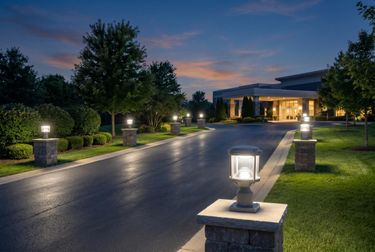
Why LED Post Lights Are the Ideal Choice for Driveways
Imagine pulling into a sprawling commercial estate or a high-end residential complex shortly after dusk. The very first impression isn't made by the landscaping or the architectural facade; it is dictated entirely by the quality of the illumination guiding your approach. Inadequate lighting creates immediate safety hazards, slows vehicular traffic, and severely diminishes the property's perceived value. For facility managers, landscape architects, and municipal engineers, selecting the correct perimeter and approach illumination is a critical early-stage project decision. When evaluating the best combination of visibility, aesthetic appeal, and long-term infrastructure reliability, designing with LED post lights driveway layouts emerges as a leading strategy. But what exactly makes these specific commercial-grade fixtures outperform traditional lighting alternatives when it comes to guiding vehicles and pedestrians safely through a large property?
Aesthetic and Security Benefits of Courtyard Post Lighting
Good lighting does far more than simply push back the dark; it defines the spatial boundaries of a property. When you integrate courtyard post lighting into an entrance, campus, or perimeter, you are establishing a visual boundary that is both welcoming to visitors and secure against intrusion. For commercial applications, balancing this form and function requires precise optical engineering.
- Optimized Wayfinding: A well-spaced series of fixtures provides a clear visual runway for drivers. This reduces driver hesitation at intersections, clearly marks pedestrian crosswalks, and safely directs heavy commercial traffic toward loading zones or main parking structures.
- Advanced Glare Reduction: Commercial LED fixtures utilize highly engineered optical lenses to direct light precisely where it is needed—downward and outward. This prevents the blinding "spill light" that can momentarily impair a driver's vision or cause light trespass into neighboring properties.
- Visual Hierarchy: By establishing a consistent rhythm of light along the primary approach, landscape designers can create a hierarchy of spaces, drawing the eye toward the main facility entrance while softly illuminating surrounding foliage or architectural signage.
- Tailored Light Distribution: Depending on the width of the roadway, engineers can specify different light distribution patterns (such as Type III for roadways or Type V for 360-degree spread) to ensure uniform coverage without wasting energy on illuminating empty grassy areas.
Hardwired Pillar Lights vs. Temporary Solutions
The commercial lighting market is frequently flooded with low-cost, solar-powered stake lights or battery-operated fixtures heavily marketed as quick fixes for dark pathways and perimeters. However, for industrial parks, municipal buildings, or premium residential developments, these temporary setups introduce severe operational limitations. They suffer from erratic lumen output, rapid battery degradation in cold weather, and an overall structural fragility that cannot withstand commercial landscaping equipment or heavy foot traffic. By contrast, hardwired pillar lights provide a permanent, reliable infrastructure. Because they are directly connected to the main electrical grid, these robust fixtures deliver consistent, high-output illumination regardless of heavy cloud cover, seasonal temperature drops, or battery lifespans.
Furthermore, professional hardwired installations allow facility managers to implement precise facility-wide control systems. Hardwiring enables seamless integration with central building management platforms, allowing for scheduled dimming, zoning, and immediate fault reporting. The initial upfront investment required for trenching and routing electrical conduit is rapidly offset by the total elimination of constant battery replacements, reduced maintenance labor, and the absolute guarantee of uninterrupted, high-quality performance. When safety and liability are on the line, temporary consumer-grade lighting simply cannot compete with commercial infrastructure.
| Feature | Hardwired LED Pillar Lights | Temporary / Solar Alternatives |
|---|---|---|
| Lumen Output | High, consistent, and uniform | Low, rapidly fluctuates with charge |
| Operational Reliability | Unaffected by weather or seasons | Degrades heavily in winter/clouds |
| Expected Lifespan | 50,000 to 100,000+ hours | 1 to 2 years (limited by battery) |
| System Control | Centralized, smart-ready, dimmable | Standalone, manual, unnetworked |
| Structural Integrity | Die-cast aluminum, high IK rating | Plastic or thin metal, easily broken |
Improving Property Security Through Advanced Illumination
Security lighting requires incredibly uniform light distribution to eliminate the deep shadows and blind spots where unauthorized individuals might hide. Effective perimeter security is heavily reliant on achieving consistent vertical and horizontal illuminance across the entire driveway and entrance zone. When designing a lighting layout for an approach, lighting engineers must calculate the precise spacing and wattage of the fixtures to ensure there are no sharp drop-offs in light levels between poles. Uniform illumination is vital because it ensures that security cameras can capture high-contrast, clear footage without the camera sensors struggling against extreme glare or plunging darkness.
Additionally, deploying fixtures with high Color Rendering Index (CRI) values is a critical factor for modern surveillance. A higher CRI allows security personnel and high-definition CCTV systems to accurately identify the specific colors of vehicles, license plates, and clothing, which is essential for post-incident investigations. The strategic placement of these robust LED fixtures acts as a powerful psychological deterrent to trespassing and vandalism. When a property is brightly and evenly lit, it signals to potential intruders that the facility is actively monitored and well-maintained, while simultaneously ensuring that legitimate visitors, employees, and logistics drivers can navigate the site with complete confidence and safety.
Durability Against Severe Weather and Impacts
For outdoor commercial applications, surviving the elements is just as critical as the quality of the light output. A fixture that fails after a single season of heavy rain or snow is a liability to the property owner.
- Corrosion Resistance: High-quality fixtures utilize die-cast aluminum housings treated with specialized powder coatings. This prevents rust and corrosion, even in coastal areas exposed to high salt fog.
- Ingress Protection (IP Ratings): Commercial outdoor lighting must feature strict sealing. Fixtures rated IP65 or IP66 are completely protected against dust ingress and can withstand powerful jets of water from heavy storms or commercial pressure washers.
- Impact Resistance (IK Ratings): Whether facing accidental impacts from landscaping equipment, hail, or intentional vandalism, fixtures with high IK ratings (such as IK08 to IK10) feature polycarbonate lenses and reinforced housings that will not easily shatter or dent.
- Advanced Thermal Management: Heat is the enemy of LED longevity. Superior fixtures feature engineered heat sinks integrated into the aluminum housing, drawing heat away from the LED chips and driver, ensuring the light maintains its brightness over tens of thousands of hours without premature failure.
Architectural Versatility with an Outdoor Gate Lamp
Every commercial or municipal project has a unique architectural design language. Finding the right outdoor gate lamp to match the aesthetic intent of a property is crucial for maintaining brand identity and curb appeal.
- Adjustable Color Temperatures (CCT): Many modern fixtures offer selectable CCT. A warm 3000K can create a welcoming, hospitable atmosphere for a luxury estate, while a crisp 5000K provides high-visibility, clinical illumination for an industrial logistics hub.
- Sleek and Unobtrusive Profiles: The transition toward LED technology has allowed manufacturers to design ultra-thin, low-profile fixtures. These modern designs avoid the bulky, utilitarian look of older metal halide lamps, blending seamlessly into contemporary architectural environments.
- Tool-Free Maintenance Design: For general contractors and maintenance crews, ease of access is a massive selling point. Modern architectural fixtures often feature snap-locks or tool-free entry bays, allowing technicians to inspect drivers or surge protectors quickly without hauling specialized tools to every pole.
- Modular Mounting Options: A versatile fixture line allows the same aesthetic lamphead to be mounted on tall street poles, mid-height driveway posts, or directly onto masonry pillars, ensuring a cohesive design language across the entire property.
The Role of Smart Lighting Integration
Modern infrastructure demands more than just static, "always-on" illumination. The latest LED fixtures are frequently equipped with NEMA or Zhaga receptacles, allowing for the seamless plug-and-play integration of smart sensors, photocells, and network controllers. This technological leap enables adaptive lighting protocols. For example, fixtures can be programmed to dim to 30% during low-traffic hours deep in the night, and immediately ramp up to 100% brightness upon detecting vehicular or pedestrian movement via microwave sensors. For municipal budgets and large-scale commercial operators, this level of granular control significantly reduces overall energy consumption and carbon footprint. Furthermore, running LEDs at lower outputs effectively extends the lifespan of the electronic components, drastically accelerating the overall return on investment for the facility.
Partner with the Outdoor Lighting Experts
Upgrading your perimeter and entrance lighting is a direct investment in the safety, aesthetics, and operational efficiency of your property. For commercial contractors, lighting designers, and facility managers, settling for substandard fixtures leads to endless maintenance loops, escalating energy costs, and compromised site security. Infralumin stands at the forefront of outdoor LED manufacturing, delivering premier OEM and ODM solutions engineered for the most demanding public and industrial environments. With our rugged die-cast aluminum construction, rigorous IP and IK testing protocols, and advanced optical designs, our lighting solutions ensure your project shines brilliantly year after year. Partner with Infralumin today to secure the reliable, high-performance illumination your infrastructure deserves.
Frequently Asked Questions
What is the ideal spacing for LED post lights driveway installations?
The ideal spacing generally ranges between 15 to 30 feet, depending on the lumen output of the fixture, the height of the mounting pole, and the optical distribution pattern. A professional photometric analysis is recommended to ensure uniform coverage without dark spots.
Can courtyard post lighting be integrated with existing smart city grids?
Yes. Modern commercial fixtures often feature 0-10V dimming capabilities and standard NEMA/Zhaga receptacles, allowing them to easily connect with networked smart city nodes, motion sensors, and central management software.
Are hardwired pillar lights difficult to maintain over time?
No. While the initial installation requires electrical trenching, the long-term maintenance is minimal. High-quality LED fixtures boast lifespans exceeding 50,000 hours, and many feature tool-free access designs, making driver replacements incredibly fast and efficient for maintenance teams.
How does an outdoor gate lamp improve CCTV performance?
A properly positioned fixture provides uniform vertical and horizontal illumination, which eliminates shadows and reduces camera glare. Additionally, high CRI LEDs help cameras capture accurate colors, which is vital for identifying vehicles and individuals during security reviews.
Why is die-cast aluminum preferred for these fixtures?
Die-cast aluminum is the industry standard because it offers an exceptional strength-to-weight ratio, superior resistance to rust and corrosion, and acts as a highly efficient heat sink. This thermal management pulls heat away from the internal electronics, ensuring the longevity of the LED chips.

Zhongshan Lumin Technology Co., Ltd. is a renowned high-tech enterprise specializing in the research, development, and manufacturing of industrial LED lights.
Contact
@2026 Zhongshan Lumin Technology Co., Ltd.