

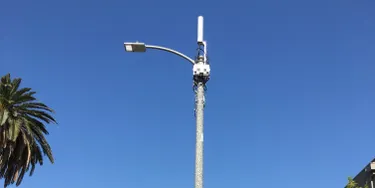
How Tall Is A Street Light Pole? A Comprehensive Guide to Street Lights
As navigators of urban and suburban landscapes, we often take street lighting for granted, oblivious to the fact that they light our way home each night. Understanding the height of street lights, or how tall are street lights, and their lifespan goes a long way in appreciating the science and careful thought that goes into the positioning of these integral public amenities. This article provides an informative guide on street light pole height, how tall a light pole is, and their expected lifespans.
In real-world street lighting projects, pole height is not only a technical parameter but a key decision factor that directly affects lighting uniformity, energy consumption, and total project cost. For municipal authorities, engineering contractors, and commercial developers, selecting the correct street light pole height must comply with road classification standards while aligning with long-term maintenance and procurement strategies. Understanding these requirements early helps avoid redesign, reinstallation, and unnecessary budget overruns.

Understanding Street Lights
Let's start by answering one of the most common queries - what is a street light? The origin of street lights dates back to the 4th century in the city of Antioch where they served as safeguards against pedestrian accidents. Initially, the system utilized coal gas as the primary fuel, but the modern era has ushered in new technologies, including LED and high-intensity discharge lamps, employed in beacon lights, roadway lights, and cycle path lights.
Street lights, also known as light poles or lampposts, are towering fixtures providing illumination along roads or pathways. Activated automatically through light-sensitive photocells at dusk, dawn, or the onset of poor weather conditions, they contribute significantly to public safety.

Types of Street Lamps
To determine how tall is a street light pole, it's crucial to recognize various street lamp types, divided by the light source and the location of use. Light sources include LED street lamps, induction lamps, energy-saving lamps, high-pressure sodium lamps, and metal halide lamps. On the location aspect, we have ordinary street lamps, high-post street lamps, courtyard street lamps, and landscape street lamps, among others.
In professional lighting design, street light pole height is usually determined according to road type, traffic volume, and installation spacing requirements. Standards such as EN 13201 and IES roadway lighting guidelines provide reference ranges, but final pole height selection often requires project-specific evaluation. For B2B buyers, this means pole height should be considered together with beam distribution, pole material, and installation environment to ensure compliance and optimal performance.
The function of the light also determines the choice. If illumination is the primary goal, street lights - which are usually more than 5 meters in height - are used. For landscaping purposes, garden lights of about 3 meters are preferred.

Standard Heights of Street Light Poles
The standard size of the street light pole or standard light pole height can range from 2.4m to 15.2m (28 – 50 ft) (dimensions.com). The specific street light height depends on the road's width. If the light is one-sided, the height of a light pole should match the road's width, or be less than 1 meter wider.
A typical correlation exists between the power of common LED street lamps and the pole height: 100W street lamps stand below 15 ft, 150W lamps under 22 ft, 200W lamps below 28 ft, and 300W lamps under 35ft. For garden lights, pole height generally ranges from 3 to 4 m(9.8-13.1 ft), while high pole lights, also named high-mast, are usually over 15 m (49.3 ft).

From a procurement perspective, street light pole height also influences logistics, foundation design, and overall installation cost. Taller poles may reduce the number of luminaires required along long road sections, while shorter poles can be more suitable for industrial parks or residential access roads. For large-scale street lighting projects, balancing pole height with spacing and lumen output is essential to control total ownership cost rather than focusing on unit price alone.
Factors Influencing Street Light Pole Heights
The height of street lights isn't chosen randomly. Various considerations include location requirements, traffic density, road width, street lamp spacing, and the type of light source.
A. The location of installation impacts the street light pole height. Rural roads, county roads, and provincial roads have different pole heights, mainly correlating with road width.
B. Traffic density and vehicle type also influence the height of a light pole. Areas with larger vehicles require higher street lights while zones with fewer large vehicles can have lower street lights.
C. The pole height also needs to be proportionate to the road's width and the spacing between street lamps. Street lamps' longitudinal spacing typically falls between 30 to 50 meters, influenced by factors such as the LED street light's power and the road width.
D. The type of light source directly influences the height of street light poles, primarily due to differences in light intensity, distribution, and efficiency among different light sources.
- High-intensity light sources like Metal Halide and High-Pressure Sodium lamps can illuminate broader areas, permitting taller poles and wider spacing between them. However, these sources tend to emit light in all directions, creating unwanted light pollution and wasting energy.
- Conversely, LED (Light Emitting Diodes) sources, which have gained popularity recently, are highly energy-efficient and can direct light precisely where needed. They generate uniform, bright light, reducing the dark spots between poles. This directional lighting ability allows for lower pole heights and closer spacing, reducing light pollution and providing a more consistent lighting environment.
In essence, while brighter, high-intensity light sources might seem suitable for taller poles, energy-efficient and directionally-precise sources like LEDs may allow for greater flexibility in pole height and placement while maintaining or improving lighting conditions.

Useful Calculation Formulas and Examples
1. Calculate the Distance between Each Streetlight Pole
Formula: Spacing between each Pole = (LL * CU * LLD * LDD) / (Eh * W)
- LL: Lamp Output (Lumen)
- CU: Coefficient of Utilization Factor
- LLD: Lamp Lumen Depreciation Factor
- LDD: Light Loss Depreciation Factor
- Eh: Required Lux Level
- W: Road width
Example:
Calculate the distance between each streetlight pole with the following details:
Road Details: The width of the road is 65.62 feet (20 meters).
Pole Details: The height of the pole is 26.25 feet (8 meters).
Luminaire of each Pole: Wattage of Luminaries is 150 Watts, Lamp Output (LL) is 18000 Lumens, Required Lux Level (Eh) is 8 Lux, Coefficient of Utilization Factor (Cu) is 0.2, Lamp Lumen Depreciation Factor (LLD) is 0.85, Light Loss Depreciation Factor (LDD) is 0.9.
Using the formula:
Spacing between each Pole = (LL * CU * LLD * LDD) / (Eh * W)= (18000 * 0.2 * 0.85 * 0.9) / (8 * 65.62)≈ 11.99 feet (94.5 meters)
Therefore, the distance between each streetlight pole in this example is approximately 11.99 feet (94.5 meters).
2. Calculate the Wattage of Each Streetlight Luminaire
Formula: Watt of Each Street Light Luminaire = Average Lumen of Lamp / Luminous efficacy
- Average Lumen of Lamp: Calculated as (L x W x D) / (mf x cu) in the example.
- L: Required Illumination Level for Street Light (Lux per Square Meter)
- W: Width of the road
- D: Distance between each pole
- mf: Maintenance Factor
- cu: Coefficient of Utilization Factor
- Luminous efficacy: Lumen per Watt (efficiency of the luminaire)
Example:
Calculate the streetlight wattage for each luminaire with the following details:
- Road Details: The width of the road is 32.81 feet. (10 meters)
- Distance between each pole (D) is 131.23 feet. ( 40 meters)
- Required Illumination Level for Street Light (L) is 8 Lux per Square Meter.
- Luminous efficacy is 30 Lumen/Watt.
- Maintenance Factor (mf) is 0.35.
- Coefficient of Utilization Factor (cu) is 0.8.
Using the formula:
Average Lumen of Lamp = (L x W x D) / (mf x cu) = (8 x 32.81 x 131.23) / (0.35 x 0.8)
Average Lumen of Lamp ≈ 13,146.46 Lumen
Watt of Each Street Light Luminaire = Average Lumen of Lamp / Luminous efficacy= 13,146.46 / 30≈ 438.22 Watts
Therefore, the wattage of each streetlight luminaire in this example is approximately 438.22 Watts.
3. Calculate the Required Power for a Streetlight Area
Formula: Required Streetlight Watt = (Lux per Sq.Meter x Surface Area of Street Light) / Lumen per Watt
- Lux per Sq.Meter: Required Illumination Level for Street Light (Lux per Square Meter)
- Surface Area of Street Light: Area to be illuminated (Square Meter)
- Lumen per Watt: Luminous efficacy (Lumen per Watt)
Example:
Calculate the required power for a streetlight area with the following details:
- Required Illumination Level for Street Light (L) is 8 Lux per Square Meter.
- Luminous efficacy (En) is 25 Lumen per Watt.
- Required Street Light Area to be illuminated (A) is 3 Square Meters.
Using the formula:
Required Streetlight Watt = (Lux per Sq.Meter x Surface Area of Street Light) / Lumen per Watt= (8 x 3) / 25= 0.96 watts
Therefore, the required power for the streetlight area in this example is approximately 0.96 watts.

Further Considerations for Street Light Poles
Understanding how tall a street light is doesn't end with knowing its height. Other details like intervals between lights, installation environment, light distribution, aesthetics, and maintenance are just as crucial.
1. Consistent Spacing of Lights
Street lights primarily serve to illuminate paths for pedestrians, cyclists, and motorists. If lights are unevenly spaced, resulting in a well-lit area followed by a pitch-black space, this can cause accidents. Consistent intervals between lights are essential for safety. The spacing between the two light poles should be approximately 2.5-3 times the height of the pole (innovationdiscoveries). Shorter light poles should be installed at closer intervals.
2. Environment of Installation
The area of installation affects the type of pole needed. In coastal regions, for instance, poles should have a special finish to prevent corrosion from salt water.
3. Distribution of Light
Even with well-lit streets, obstacles like trees or tall buildings can create dark spots. It's critical to account for these when planning the placement of street lights.
4. Aesthetical Values of Street Light Poles
Today, street light poles don't just serve functional purposes. Decorative lighting poles highlight aesthetic features like statues, gardens, and fountains, adding charm and transforming otherwise mundane city spaces.
5. Maintenance of Street Light
An average LED street light operates for around 10 to 12 hours daily, and the bulb can last approximately 50,000 hours. It's essential to replace bulbs as needed for efficient lighting, and ensure the poles are sturdy enough to support the fixtures.
Now we know that determining how tall a street light is, the height of a light pole, or how long street lights last involves a complex set of considerations, from technical aspects to aesthetic concerns. Yet, it's this careful design and thought process that ensures our streets are safe and visually appealing after sunset. With this comprehensive guide, you should have a deeper understanding of these often overlooked yet crucial elements of our daily lives.

Leading LED Street Light Manufacturer in China - Infralumin
Experienced manufacturers can support projects by providing pole height recommendations, structural calculations, and customized solutions based on local regulations and project requirements. For infrastructure and commercial lighting projects, working with a supplier that offers both standard and customized street light poles helps ensure smooth approval, installation, and long-term operation. At Infralumin, we support street lighting projects with a wide range of street light poles designed for municipal roads, industrial zones, and commercial developments. Our team works closely with engineers and contractors to match pole height, lighting distribution, and installation conditions, ensuring compliance with international standards while optimizing project efficiency. Whether for standard configurations or customized requirements, selecting the correct street light pole height becomes a streamlined and reliable process.
Regarded as one of the leading LED street light manufacturers in China, Infralumin crafts a diverse range of indoor and outdoor lighting solutions to accommodate your commercial and residential electrical and lighting project requirements. Discover more about Infralumin.
Infralumin upholds the quality of its lighting products with a robust 5+ years warranty covering all our fixtures, mounts, sensors, and more.
Embarking on a project? Looking to place bulk orders or resell our luminaires as a distributor? Infralumin is equipped to fulfill all your commercial and residential property lighting needs. Contact us today at +86-13858607316 or reach us via email at sales6@infralumin.com.
FAQ
How do engineers determine the optimal street light pole height?
Engineers determine the optimal street light pole height by evaluating multiple project-specific factors rather than relying on a single fixed standard. The process typically starts with road classification, traffic speed, and lane width, which define the required illumination level and uniformity. Based on these parameters, engineers calculate pole height together with pole spacing, luminaire wattage, and beam angle to achieve compliant lighting performance. Environmental conditions, such as surrounding buildings, trees, and installation constraints, are also considered to avoid glare and light loss. In professional street lighting projects, pole height is therefore selected as part of an integrated lighting design that balances safety, efficiency, and long-term operating cost.
Does pole height affect project approval and compliance?
Yes, street light pole height has a direct impact on project approval and regulatory compliance. Most municipal and infrastructure projects must follow regional or international lighting standards, such as EN 13201 or IES roadway lighting guidelines, which define acceptable illumination levels, uniformity, and glare control. Pole height influences all of these parameters and is often reviewed during design approval. An incorrect pole height can lead to non-compliant lighting results, requiring redesign or additional installation work. Selecting an appropriate pole height that aligns with applicable standards helps ensure smoother approval processes, reduces revision risks, and supports long-term compliance throughout the project lifecycle.

Zhongshan Lumin Technology Co., Ltd. is a renowned high-tech enterprise specializing in the research, development, and manufacturing of industrial LED lights.
Contact
@2026 Zhongshan Lumin Technology Co., Ltd.