

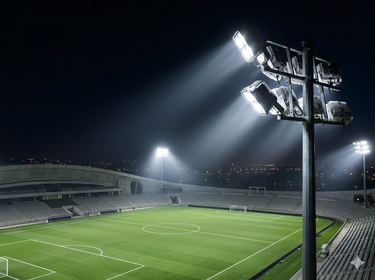
Advantages and Disadvantages of LED Stadium Lights
Upgrading a sports facility's lighting system is a major capital investment that directly impacts player performance, spectator experience, and long-term operational budgets. Facility managers, general contractors, and municipal engineers often face a critical decision when replacing legacy outdoor fixtures or designing illumination for a new arena. Understanding the pros and cons of LED stadium lights is the first step toward making an informed choice that aligns with your project specifications and sustainability goals. Upgrading from traditional technologies involves analyzing complex technical variables, but the resulting improvements in visibility and efficiency can dramatically transform a venue. Are you ready to determine if upgrading your facility's illumination is truly worth the investment?
Introduction to Professional Sports Lighting
Professional sports lighting is a highly specialized discipline that goes far beyond simply mounting high-wattage fixtures on tall poles. It requires meticulously engineered optical designs to achieve uniform illumination across vast open spaces without creating blinding glare for athletes or spectators. Designing an effective layout means addressing strict photometric requirements, including precise horizontal illuminance for the playing surface and critical vertical illuminance for television broadcasting.
Modern high-definition and 4K sports broadcasting demand exceptional lighting conditions to ensure that high-speed camera sensors capture accurate colors without motion artifacts or shadowing. Lighting engineers must account for complex environmental and physical variables, including pole height, beam angles, wind load limits, and the harsh outdoor conditions these fixtures must endure year-round. This is where the structural integrity of the housing, advanced heat dissipation structures, and precisely calibrated optical lenses play a pivotal role in the success of municipal and commercial installations. Achieving the perfect balance between visibility, safety, and energy consumption requires a deep understanding of lighting physics and the specific visual demands of different sports, from local high school football fields to professional soccer stadiums.
LED vs. Metal Halide Stadium Lights
For decades, metal halide and high-pressure sodium (HID) lamps were the industry standard for illuminating large outdoor arenas. However, the rapid advancement of semiconductor technology has shifted the paradigm entirely. When evaluating LED vs. metal halide stadium lights, it becomes clear that traditional lighting technologies suffer from inherent inefficiencies.
Metal halide fixtures rely on a physical arc tube and gas mixture that takes significant time to warm up and reach full brightness. Furthermore, they experience severe lumen depreciation, often losing up to half of their initial light output well before the bulb actually burns out. This forces facility managers into aggressive and costly relamping schedules to maintain required foot-candle levels on the field. Solid-state lighting fundamentally changes this operational model. Below is a direct comparison of the two technologies across critical performance metrics.
| Feature / Metric | Traditional Metal Halide / HID | Modern LED Sports Fixtures |
|---|---|---|
| Energy Efficiency | Low (Much energy lost as heat) | High (Up to 75% energy savings) |
| Warm-up / Restrike Time | 10 to 15 minutes | Instant ON / OFF |
| Lumen Maintenance | Rapid depreciation (drops 50% quickly) | High (L70 lifespan often exceeds 50,000 hours) |
| Color Rendering (CRI) | Moderate (Typically 60-70) | Excellent (Commonly 80 to 90+) |
| Dimming and Control | Very limited | Full dynamic control (DALI, DMX compatible) |
| Maintenance Frequency | High (Frequent bulb and ballast replacements) | Extremely Low (Solid-state reliability) |
Advantages of LED Sports Lighting
The shift toward solid-state illumination in athletic venues is driven by a series of compelling technical and financial benefits. The advantages of LED sports lighting extend from the utility meter down to the visual comfort of the players on the field.
- Exceptional Energy Efficiency and Operational Savings: The most immediate benefit is the drastic reduction in power consumption. Solid-state fixtures convert a much higher percentage of electricity directly into visible light rather than heat. Depending on the legacy system being replaced, facilities can routinely observe energy savings ranging from 60% to 75%. Over the lifespan of a stadium installation, this translates to massive reductions in utility overhead.
- Superior Color Rendering Index (CRI) and Flicker-Free Performance: For televised events, lighting quality is non-negotiable. Modern fixtures boast high CRI ratings (often 80 or 90+), ensuring that the colors of team jerseys, the grass, and the equipment look vivid and true to life. Furthermore, premium stadium fixtures utilize advanced driver technology to provide completely flicker-free illumination. This is an absolute necessity for high-speed, slow-motion camera recording, eliminating the strobing effect that plagues traditional HID broadcasts.
- Instant On/Off and Smart Lighting Integration: Unlike metal halide lamps that require a prolonged warm-up period, solid-state fixtures offer instant illumination. This allows operators to easily turn the lights off during halftime or weather delays without worrying about a 15-minute restrike penalty. Additionally, these systems seamlessly integrate with smart lighting controls, enabling dynamic dimming, customized light shows, and zoned illumination for different events or maintenance periods.
- Precision Light Distribution and Glare Control: Through the use of highly engineered optical lenses and asymmetrical light distribution designs, modern fixtures push light exactly where it is needed—on the playing surface—while minimizing light spill into surrounding neighborhoods. Built-in glare shields and precise beam angles drastically reduce the blinding effect on players tracking aerial balls.
- Durability and Low Maintenance: High-quality commercial fixtures utilize robust die-cast aluminum housings and advanced thermal management systems to protect internal components. With high IP (Ingress Protection) and IK (Impact Protection) ratings, they are sealed against dust, heavy rain, and physical impacts, virtually eliminating the need for expensive lift-truck rentals for routine bulb replacements.
Potential Drawbacks of LED Stadium Lights
While the long-term benefits are substantial, a realistic assessment of the pros and cons of LED stadium lights requires acknowledging the challenges associated with upgrading.
- Higher Initial Capital Expenditure: The primary barrier to entry is the upfront cost. High-wattage outdoor fixtures, complete with sophisticated drivers, die-cast aluminum heat sinks, and precision optics, require a larger initial investment compared to purchasing replacement metal halide bulbs and ballasts. However, return on investment (ROI) is typically achieved within 2 to 4 years through energy and maintenance savings.
- Thermal Management Sensitivity: While they do not radiate heat forward into the light beam like halogens, the diode boards themselves generate internal heat. If this heat is not effectively dissipated, it can degrade the semiconductor, leading to premature failure and color shifting. Purchasing fixtures with inadequate heat dissipation structures will completely negate the lifespan benefits of the technology.
- Weight and Wind Load Considerations: Retrofitting older poles with new fixtures requires careful engineering. High-wattage solid-state fixtures, due to their heavy die-cast aluminum heat sinks, can sometimes be heavier or have a different aerodynamic profile than the aerodynamic round bowls of legacy HID lights. Structural engineers must verify that the existing poles can handle the EPA (Effective Projected Area) wind load of the new fixtures.
Essential Buying Guide
Selecting the appropriate fixtures for a commercial or municipal project requires looking past basic wattage and focusing on engineering specifications. When evaluating manufacturers, prioritize those that offer robust thermal management, often achieved through heavy-duty die-cast aluminum housings that draw heat away from the core components. You must also evaluate the IP and IK protection ratings; an outdoor sports facility demands an absolute minimum of IP66 to prevent water ingress during severe storms, and IK08 or higher to withstand impacts from weather or stray sports equipment.
Equally important is the quality of the internal components. Ensure that the fixtures utilize tier-one LED chips and highly reliable LED drivers, as the driver is most frequently the point of failure in poorly constructed units. Look for features that simplify contractor installation and long-term upkeep, such as tool-free maintenance designs that allow technicians to easily access power supplies without removing the entire fixture from the mounting bracket. Finally, work with a supplier that offers comprehensive photometric planning and OEM/ODM customization services. A reliable manufacturer will provide detailed DIALux simulations to guarantee that the specified fixtures, beam angles, and color temperatures (CCT) will perfectly meet the required illuminance standards of your specific sporting association.
Conclusion
Transitioning to modern illumination is a strategic move that enhances safety, elevates the spectator experience, and drastically cuts operating costs. While the upfront investment requires careful budgeting, the stadium lighting benefits—ranging from zero maintenance to broadcast-quality, flicker-free performance—make it a superior choice for any forward-thinking facility. For commercial and industrial applications, partnering with an experienced manufacturer ensures you receive reliable, high-performance fixtures tailored to your exact needs. As a dedicated provider of outdoor LED lighting solutions, Infralumin stands ready to support your next project with premium customization, rigorous quality control, and expert technical guidance.
FAQ
What are the main stadium lighting benefits over traditional lighting?
The primary benefits include a reduction in energy consumption by up to 75%, an operational lifespan exceeding 50,000 hours, instant on/off capabilities, and vastly superior color rendering (CRI). Additionally, they do not require the frequent, expensive bulb replacements associated with legacy systems.
Are the pros and cons of LED stadium lights heavily dependent on the climate?
While the advantages generally outweigh the disadvantages in any climate, extremely hot environments do test the physical limits of the fixtures. The primary con in such climates is the risk of driver failure if the fixture lacks a high-quality die-cast aluminum heat sink for proper thermal management.
How does LED vs. metal halide stadium lights impact television broadcasting?
Solid-state technology is vastly superior for broadcasting. Metal halide lights often produce a subtle flicker that ruins high-definition, slow-motion replays. Modern fixtures powered by high-quality drivers provide completely flicker-free illumination and higher CRI, ensuring accurate color representation on camera.
What IP and IK ratings should I look for in outdoor sports fixtures?
For outdoor environments, you should demand a minimum rating of IP66 to ensure the fixture is completely dust-tight and protected against powerful jets of water. An impact protection rating of IK08 to IK10 is also highly recommended to withstand hail, debris, and accidental impacts.
Can existing stadium poles support the weight of new fixtures?
In many cases, yes, but it is crucial to consult a structural engineer. Because you are evaluating the pros and cons of LED stadium lights, you must consider that advanced heat sinks can add weight and alter the wind load (EPA) on existing poles, requiring a professional assessment before installation.

Zhongshan Lumin Technology Co., Ltd. is a renowned high-tech enterprise specializing in the research, development, and manufacturing of industrial LED lights.
Contact
@2026 Zhongshan Lumin Technology Co., Ltd.