

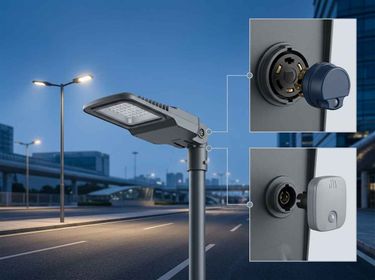
NEMA vs Zhaga for LED Street Lights: What Is the Difference?
Choosing the right interface for LED street lights affects control-device compatibility, installation and future maintenance. NEMA and Zhaga Book 18 are two common options, each with different interface specifications and integration requirements.
For municipal lighting buyers, contractors and distributors, the decision should be based on existing infrastructure, planned control functions and project requirements. This guide compares both interfaces and explains how to specify and verify the right configuration.
What Are NEMA and Zhaga Interfaces for LED Street Lights?
Both interfaces provide standardized connection points between LED street light luminaires and external control devices, but they follow different specifications.
NEMA Socket
A NEMA socket street light typically uses an ANSI C136.41 locking-type receptacle for external photocontrols and compatible lighting controllers. The standard covers mechanical, electrical and marking requirements for the interface, including 0–10 V and DALI dimming within its scope.
NEMA configurations are commonly considered for projects using photocontrols, dimming controllers or existing roadway lighting control equipment. Actual functions depend on the selected controller, receptacle and LED driver.
Zhaga Book 18 Socket
A Zhaga socket street light uses an interface defined by Zhaga Book 18 for connecting outdoor luminaires with sensing or communication nodes. The specification covers mechanical fit, electrical connections, power and communication requirements.
Zhaga Book 18 is designed to simplify the integration and replacement of compatible nodes used in outdoor lighting. Edition 4.0, released in October 2025, expands the specification to include applications such as heritage and decorative luminaires.
Zhaga-D4i certification provides a defined basis for interoperability between qualifying luminaires and control devices. A Zhaga socket alone, however, does not guarantee certification or compatibility with every lighting management platform.
NEMA vs Zhaga: What Are the Key Differences?
The main differences concern interface design, connected devices and integration requirements.
| Comparison factor | NEMA socket | Zhaga Book 18 socket |
|---|---|---|
| Applicable specification | ANSI C136.41 | Zhaga Book 18 |
| Connection design | Locking-type receptacle | Standardized interface for outdoor sensing and communication nodes |
| Typical applications | Photocontrols, dimming and compatible external controls | Sensors, communication nodes and smart lighting controls |
| Key compatibility checks | Receptacle, controller, wiring and driver | Socket, node, power and communication requirements |
| Certification considerations | Applicable standards and project requirements | Applicable Book 18 edition and Zhaga-D4i certification where specified |
| Typical selection priority | Existing infrastructure and control-device requirements | Planned sensing, connectivity and replaceable nodes |
Interface Design and Device Compatibility
NEMA and Zhaga use different interface specifications. A device designed for one interface cannot be assumed to fit or function correctly with the other.
For replacement projects, compatibility with existing controllers may influence the choice. For new installations, the interface should match the selected sensing or communication nodes and their electrical requirements.
Control Functions and Interoperability
Both interfaces can support smart street lighting applications, but the available functions depend on the connected devices and system architecture.
NEMA configurations can support compatible photocontrol and dimming functions. Zhaga Book 18 provides a standardized connection for compatible sensing and communication nodes.
Zhaga-D4i certification can help verify interoperability between qualifying components, but it does not guarantee compatibility with every third-party management platform. Buyers should assess the complete system rather than the socket alone.
Which Interface Fits Your LED Street Lighting Project?
The most suitable interface depends on the project's existing equipment, control requirements and upgrade plans.
Existing Street Lighting Upgrades
If a municipality intends to retain existing photocontrols or lighting controllers, a NEMA socket may be appropriate when it matches the installed equipment. Verify the receptacle configuration, dimming requirements and driver compatibility before specifying replacement luminaires.
New Smart Street Lighting Projects
For new installations requiring sensing or communication nodes, Zhaga Book 18 is worth evaluating. Define the required functions first, then confirm that the selected luminaire, node and management system support them. Specify Zhaga-D4i certification when required by the project.
Phased Upgrades or Multiple Control Requirements
A dual-interface luminaire may suit projects that need to accommodate both NEMA and Zhaga devices. Infralumin can provide NEMA, Zhaga or dual-interface configurations according to project requirements.
Before selecting a dual-interface option, specify the function of each socket and verify the proposed configuration against the applicable standards, device requirements and certification conditions. Two interfaces do not automatically provide two independent or universally compatible control systems.
What Should Buyers Check Before Specifying NEMA or Zhaga?
Selecting an interface is only the first step. Procurement documents should define the exact configuration, required functions, supporting evidence and acceptance criteria. The following checklist can help buyers evaluate supplier quotations and verify delivered products.
1. Specify the Interface and Physical Configuration
State the required interface explicitly in the tender or technical specification.
For NEMA, identify the applicable ANSI C136.41 requirements and receptacle configuration. For Zhaga, specify Book 18 and the applicable edition. If both interfaces are required, state this explicitly and identify the intended function of each socket.
Request a technical datasheet or drawing showing the socket type, mounting position and configuration.
Acceptance check: The supplied luminaire matches the approved datasheet, drawings and bill of materials.
2. Define Electrical and Dimming Requirements
Specify the required control method, dimming protocol and relevant electrical requirements. Confirm that the proposed receptacle, controller and LED driver support the intended configuration.
For Zhaga nodes, also verify the required power and communication characteristics. Do not assume that a matching socket guarantees functional compatibility.
Acceptance check: The supplier provides written compatibility confirmation for the specified luminaire, driver and control device.
3. Define the Control System and Supply Scope
Describe the functions the project requires, such as automatic switching, scheduled dimming, sensor-based control or remote monitoring. Identify the communication and management system requirements where applicable.
Clarify which components are included in the quotation. A socket-equipped luminaire may still require separately supplied controllers, sensors, communication nodes or gateways.
Acceptance check: The bill of materials identifies the required components, and the proposed configuration supports the functions specified in the tender.
4. Request Standards and Certification Documents
Specify the documents required for technical evaluation and delivery approval.
For NEMA configurations, request evidence of compliance with the applicable ANSI C136.41 requirements. For Zhaga configurations, verify the applicable Book 18 edition and request Zhaga-D4i certification when required.
Check that documents identify the actual product models being supplied. A general statement of compliance is not sufficient evidence that every component or system function meets the project's requirements.
Acceptance check: The submitted documents match the proposed product models and the project's stated compliance requirements.
5. Establish Installation and Commissioning Tests
Define acceptance procedures before placing the order. These should cover both physical inspection and functional testing.
Use the following checklist during delivery and commissioning:
Configuration: Verify that the installed socket type, quantity and position match the approved drawings.
Components: Confirm that controllers, nodes and accessories match the approved bill of materials.
Documentation: Check that required datasheets, compliance documents and certificates have been supplied.
Installation: Verify that the selected control device can be installed and replaced according to the manufacturer's instructions.
Functional performance: Test the specified switching, dimming, sensing or communication functions.
System integration: Where required, verify communication with the designated lighting management system.
For large municipal projects, incorporate these checks into the inspection and test plan, commissioning procedure and handover documentation. Define the responsible party and required evidence for each test before contract award.
This turns interface selection into a verifiable procurement requirement and helps reduce the risk of discovering compatibility problems after installation.
How Can Infralumin Support Your Street Lighting Project?
Infralumin provides LED street lights with NEMA, Zhaga or dual-interface configurations according to project requirements.
Buyers can discuss their existing control infrastructure, intended smart lighting functions, technical specifications and applicable standards with the Infralumin team. Confirming these requirements before ordering helps align the luminaire configuration with the planned control devices and project acceptance criteria.
Contact Infralumin to discuss your street lighting project and request a configuration suited to your technical requirements.
References
ANSI C136.41-2025 – Roadway and Area Lighting Equipment
Covers the interface between external locking-type control devices and luminaires, including relevant mechanical, electrical and dimming requirements. Confirm the edition applicable to your project.Zhaga Book 18 – Smart Interface Between Outdoor Luminaires and Sensing/Communication Modules
Provides information on the standardized interface for outdoor luminaires and sensing or communication nodes, including the applicable Book editions.Zhaga Book 18 / Zhaga-D4i Certification – Zhaga Consortium
Explains the certification framework and requirements relevant to compatible outdoor luminaires and control devices.Zhaga-D4i Certification – DALI Alliance
Describes the joint certification program and its role in supporting interoperability between qualifying luminaires and control devices.
Note: Always verify the applicable standard edition, product certification status and project-specific requirements when preparing a lighting specification or tender.

Zhongshan Lumin Technology Co., Ltd. is a renowned high-tech enterprise specializing in the research, development, and manufacturing of industrial LED lights.
Contact
@2026 Zhongshan Lumin Technology Co., Ltd.