

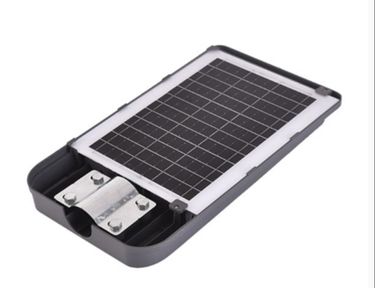
IP67 Protection & Durability in Solar Street Lights
Outdoor lighting systems operate at the intersection of exposure and endurance. Solar street lights, in particular, must function continuously under rain, dust, heat, and temperature fluctuations while remaining electrically safe and mechanically stable. IP67 protection has become a key benchmark for evaluating outdoor solar lighting durability, especially in municipal, industrial, and infrastructure projects where failure carries operational and financial consequences.
This article examines what IP67 protection means in practice, how it supports weather-resistant solar street lighting in harsh climates, and how it fits into broader solar lighting standards applied by professional solar street light manufacturers.
IP67-Rated Solar Street Lights for Outdoor Environments
IP ratings, defined under IEC 60529, describe the degree of protection provided by an enclosure against solid objects and liquids. In the IP67 classification, the “6” indicates complete protection against dust ingress, while the “7” certifies resistance to temporary immersion in water, typically up to one meter for 30 minutes.
For an IP67 solar street light, this rating applies not only to the luminaire housing but also to critical components such as LED modules, drivers, battery compartments, and cable interfaces. In real outdoor environments, fine dust, wind-driven rain, and standing water are common stressors. An IP67 enclosure prevents moisture penetration that can corrode internal electronics or degrade optical performance over time.
From an operational perspective, IP67 protection reduces maintenance frequency and extends service life, which is particularly relevant for off-grid or remote installations where access is limited.
Weather-Resistant Solar Street Lighting in Harsh Climates
Weather resistance is not a single feature but a system-level outcome. In hot desert regions, solar street lights face prolonged UV exposure, sand abrasion, and extreme daytime temperatures. In coastal or tropical areas, salt spray, humidity, and heavy rainfall dominate. Cold climates introduce freeze-thaw cycles that can stress seals and materials.
An IP67 weatherproof street light addresses water and dust ingress, but true climate resilience also depends on material selection and thermal design. Die-cast aluminum housings, corrosion-resistant coatings, silicone gaskets, and pressure-balanced venting systems help maintain enclosure integrity under temperature changes. Battery protection is equally critical, as moisture intrusion can rapidly shorten battery lifespan.
Professional solar lighting standards require manufacturers to validate performance through environmental testing, including water immersion, thermal cycling, and long-term aging simulations. These tests translate laboratory ratings into reliable field performance.
Outdoor Durability Standards for Solar LED Street Lights
Beyond IP ratings, outdoor solar lighting durability is shaped by a combination of international and industry standards. These include LED lifespan metrics, electrical safety certifications, and structural load requirements for wind resistance. For large-scale projects, buyers increasingly evaluate whether a solar street light manufacturer can demonstrate consistent quality control, documented testing procedures, and traceable component sourcing.
Durability also relates to system integration. Poor cable routing, mismatched components, or inadequate heat dissipation can undermine even a high IP rating. Experienced manufacturers design solar LED street lights as integrated systems rather than assembled parts, ensuring that protection levels are maintained throughout the product’s operational life.
Applying IP67 Standards in Real Products
Infralumin applies IP67 protection principles across its solar street lighting portfolio, focusing on long-term outdoor performance rather than nominal specifications. Products such as SSE03 Solar Street Light with radar sensor and the SSE01 cost effective Solar Street Light are engineered with sealed housings, weather-resistant electrical components, and robust structural design suitable for demanding environments.
These models are designed to meet practical requirements for municipal roads, industrial zones, and infrastructure projects where reliability, safety, and reduced maintenance are priorities. As a solar street light manufacturer serving global markets, Infralumin aligns product design with recognized solar lighting standards to ensure consistent performance across climates.
IP67 protection is not merely a technical label. When implemented correctly, it is a foundation for dependable outdoor solar lighting that performs predictably under real environmental stress.

Zhongshan Lumin Technology Co., Ltd. is a renowned high-tech enterprise specializing in the research, development, and manufacturing of industrial LED lights.
Contact
@2026 Zhongshan Lumin Technology Co., Ltd.